
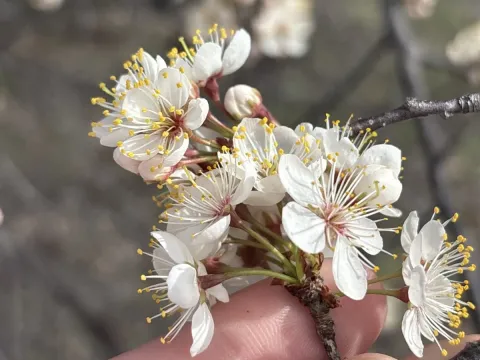
Mexican plum
Prunus mexicana
The Mexican plum (Prunus mexicana) is a deciduous tree belonging to the Rosaceae family. It is native to North America, primarily found in Mexico and the southern United States, where it thrives in forest margins and open woodlands.
What the section contains
Mexican plum
This species is highly adaptable to various soil types. It performs well in loamy and rocky soils, provided that the planting site has excellent drainage, which is crucial for preventing root rot and ensuring long-term tree health.
In terms of climate, the Mexican plum prefers temperate regions with a distinct winter dormant period. Once established, the tree demonstrates impressive drought tolerance, making it a low-maintenance choice for areas with irregular rainfall patterns.
Full sun exposure is essential for optimal growth. While the tree can tolerate partial shade, maximum fruit production and a healthy, dense canopy are only achieved when the plant receives ample direct sunlight throughout the growing season.
The species is noted for its cold hardiness. This resilience makes it a valuable plant not only for its fruit but also as a hardy rootstock for grafting more sensitive stone fruit varieties in colder regions.
The primary agricultural value of the Mexican plum lies in its fruit. The plums are typically rounded, purple to dark red when ripe, and possess a sweet, slightly tart flavor that is highly appreciated in culinary applications.
Yields are generally consistent once the tree reaches maturity, provided it receives standard horticultural care. It is a productive addition to permaculture systems, food forests, and home orchards seeking native plant integration.
Culinary uses are diverse, ranging from fresh consumption to processing into jellies, jams, and preserves. The natural pectin content makes it an excellent candidate for homemade canning projects without the need for synthetic additives.
The tree serves as an early-season nectar source for bees and other pollinators. Its early spring bloom is vital for supporting local insect populations, which benefits the overall pollination success of the entire garden ecosystem.
While not a primary timber species, the wood is hard and dense. It has historically been used for small-scale woodturning or as decorative handles for tools, showcasing the versatility of this hardy tree species.
Mexican plum is generally resistant to many pests, but it can be susceptible to fungal infections like brown rot, especially during seasons with high humidity. Proper airflow through the canopy is the best natural defense against these diseases.
Common insect pests include the plum curculio and various aphid species. Integrated pest management, focusing on early detection and removing affected fruit, helps keep the population of these insects under control without heavy chemical use.
- Plum curculio
- Aphids
- Shot hole disease
- Powdery mildew
Maintaining clean orchard hygiene is paramount. Pruning should be performed in late winter to remove dead or diseased branches, which improves air circulation and reduces the prevalence of fungal pathogens.
Removing fallen leaves and fruit debris from the base of the tree in autumn significantly reduces the number of pests and pathogens that overwinter, ensuring a healthier start for the following growing season.
The harvest season for Mexican plums usually extends from late summer into early autumn. Since the fruit ripens unevenly on the branch, growers should perform multiple pickings to ensure the fruit is harvested at its peak flavor.