
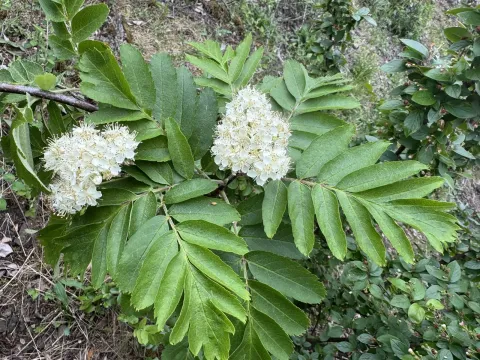
Meinich's Rowan
Sorbus meinichii
Meinich's Rowan (Sorbus meinichii) is a natural interspecific hybrid tree belonging to the Rosaceae family. It is highly valued in horticulture for its distinct foliage, which displays characteristics of both its parent species, resulting in an elegant appearance.
What the section contains
Meinich's Rowan
The tree originates from Scandinavia, naturally adapting to harsh northern environments. Its excellent frost resistance makes it an ideal candidate for cold-climate gardens where other ornamental trees might struggle to survive winter conditions.
It thrives in locations with full sun to partial shade, which promotes optimal growth and vibrant fruit production. The plant is versatile regarding soil types but prefers well-drained, moderately fertile loams that maintain consistent moisture levels.
Cultural practices include ensuring regular water supply during the establishment phase. Once the root system is fully developed, the tree becomes significantly more resilient to dry spells, making it a low-maintenance choice for many landscapes.
Standard care involves organic mulching around the base to protect the roots from extreme temperature fluctuations and to conserve soil moisture. Yearly maintenance should be kept minimal to preserve the tree's natural and graceful architecture.
The tree is generally robust, but it can be susceptible to common pests such as aphids and spider mites. Regular monitoring during the growing season allows for early intervention using appropriate biological or chemical treatments.
Fungal diseases like leaf rust or scab are more prevalent in gardens with poor air circulation or consistently high humidity. Planting in open areas with good airflow is the best preventative strategy against these pathogens.
Fire blight is another concern for members of the Rosaceae family; therefore, it is critical to sanitize pruning tools between cuts. Pruning should be performed during dormant periods to minimize the risk of infection.
Birds can sometimes cause significant fruit loss, which, while reducing the harvest, is a sign of a healthy ecosystem. If ornamental fruit retention is the priority, simple netting can be used during the peak ripening phase.
Good soil management, including preventing over-fertilization with nitrogen, helps keep the plant's growth balanced and less attractive to sucking insects. A well-nourished tree is naturally more resistant to environmental stressors and diseases.