
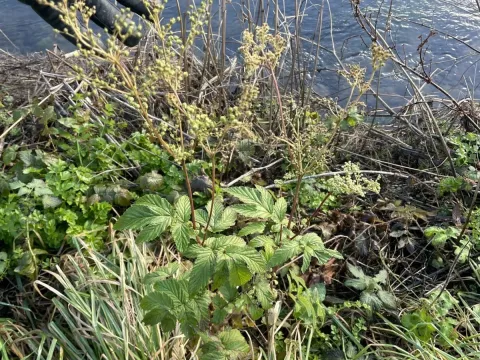
Meadowsweet
Filipendula Mill.
Meadowsweet is typically propagated through seed sowing or rhizome division, with seeds requiring a cold stratification period of at least two months to break dormancy.
What the section contains


Meadowsweet
When sowing in the open field, late autumn is the preferred time as the seeds naturally undergo the required chilling period through the winter months.
The seeds should be covered with a very thin layer of soil or compost, as they require light for optimal germination and should not be buried deeply.
For commercial production, vegetative propagation via rhizome division is preferred, ensuring a faster establishment of the plantation and higher uniformity of the crop.
Adequate plant spacing is essential to minimize disease pressure; rows should be spaced 50-70 cm apart to allow for airflow and mechanical maintenance operations.
Meadowsweet belongs to the Rosaceae family and is inherently adapted to wet and marshy landscapes, making it an excellent choice for damp soil conditions.
The plant thrives in fertile, moisture-retentive soils with high organic matter content and a neutral to slightly acidic pH level.
While the crop performs best in full sun, it exhibits remarkable tolerance to partial shade, making it versatile for various microclimates within the farm.
Irrigation management is critical; although the plant loves moisture, stagnant water that leads to anaerobic soil conditions should be avoided.
Hardiness is one of the key agricultural advantages of Filipendula species, as the crowns are capable of surviving severe frost in temperate climate regions.
Fungal diseases, specifically powdery mildew and rust, represent the primary threats to Meadowsweet, especially in regions with high humidity and poor ventilation.
Leaf spot pathogens can rapidly diminish the quality of foliage, rendering the plant unsuitable for high-grade herbal market standards if left untreated.
Pest attacks, particularly by aphids, can stunt growth and introduce viral infections, necessitating vigilant monitoring during the active vegetative season.
Integrated Pest Management (IPM) strategies, including the use of beneficial insects, are recommended to maintain the ecological integrity of the herb fields.
Crop rotation should be practiced every 3–4 years to prevent the buildup of soil-borne pathogens and to maintain soil fertility levels.
Harvesting for herbal tea or medicinal extract production occurs during the peak bloom stage when the active compounds in the flowers and leaves are highest.
Rhizomes, which are often used in traditional applications, should be harvested late in the autumn after the plant has translocated its nutrients to the roots.
Mechanical harvesting is possible for large-scale operations, but care must be taken to minimize bruising of the delicate flowers and foliage.
Drying must be conducted in controlled environments at low temperatures to ensure the preservation of volatile oils and phenolic compounds.
Storage must be strictly in airtight, cool, and dry containers to protect the dried material from moisture ingress and loss of potency over time.