
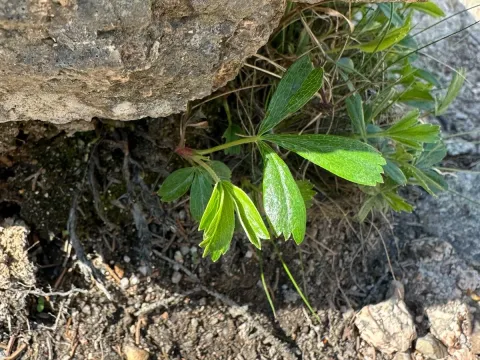
Three-toothed cinquefoil
Potentilla tridentata
Three-toothed cinquefoil (Potentilla tridentata) is a hardy perennial belonging to the Rosaceae family, widely recognized for its neat growth habit and evergreen foliage in many climates.
What the section contains
Three-toothed cinquefoil
Originating from Northern North America, this species is naturally adapted to rocky landscapes, open meadows, and high-altitude areas, showcasing exceptional resilience against harsh environmental conditions.
The plant is distinguished by its small, trifoliate leaves, each tipped with three distinct teeth, which form a low-growing mat. During late spring and summer, it produces delicate white flowers that attract beneficial pollinators.
Regarding soil and climate, it thrives in full sun to partial shade and requires well-drained, slightly acidic soil. It is highly valued for its ability to handle poor, rocky soils where other plants might struggle to survive.
Its primary agricultural and ornamental use is in rock gardens, as ground cover, or as an edging plant, providing a clean, aesthetic look with minimal maintenance requirements once established.
Common diseases affecting the plant include powdery mildew, especially during humid summers, and various types of leaf spots that can reduce the ornamental value of the foliage if left unchecked.
Root rot is the most significant threat to Three-toothed cinquefoil, typically resulting from improper planting in poorly drained soil or overwatering, which leads to oxygen deprivation in the root zone.
Pest issues such as spider mites and aphids can occasionally plague the plant during prolonged dry spells, leading to yellowing of the leaves and stunted growth of the plant.
Effective management involves maintaining good air circulation around the plants and avoiding overhead irrigation, which helps minimize the risk of foliar diseases and fungal outbreaks.
If pests or diseases appear, horticultural oils or appropriate fungicides should be applied, always following label instructions to ensure the safety of the plant and surrounding garden environment.