
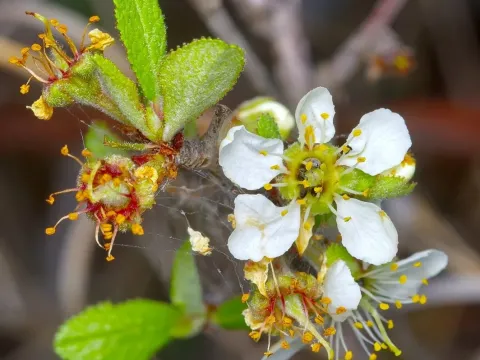
Texas sand plum
Prunus texana
The Texas sand plum (Prunus texana) is a deciduous shrub belonging to the Rosaceae family. It is native to the arid and semi-arid regions of Texas, where it thrives in harsh environments.
What the section contains
Texas sand plum
The plant requires well-drained sandy or limestone soils. It is highly drought-tolerant and capable of growing in nutrient-poor substrates that would inhibit other stone fruits.
Full sun exposure is essential for the healthy growth and fruit production of this species. It is well-adapted to hot summers and is resistant to typical heat-related stress.
Agricultural management requires minimal irrigation. Excess moisture in the soil is detrimental to the health of the plant, often causing root rot and fungal complications.
Propagation is primarily achieved via seeds or root suckers. The growth rate of the shrub is relatively slow, making it an undemanding plant once established in the landscape.
The fruit of Prunus texana is small and typically globose, characterized by a tart flavor. It is a vital food source for local wildlife, particularly for birds and small mammals in the scrubland.
There is no widespread commercial production of this plum. Yields are low, and the fruit is often too small for efficient harvesting by mechanical or manual means.
The harvest period occurs in late summer. Due to the variable ripening times, the fruit is usually foraged rather than harvested in a traditional agricultural setting.
The primary use of the plant in agriculture is as a rootstock. Its robust root system provides resilience against drought, which researchers utilize for grafting superior plum varieties.
In ornamental horticulture, the Texas sand plum is valued for its ability to provide structure and biodiversity to xeriscaping projects and naturalistic gardens.
Like many species in the Prunus genus, the Texas sand plum is susceptible to leaf curl and brown rot. Proper pruning to ensure airflow is the best preventative measure.
Pests such as aphids and various larvae can damage the foliage during the spring growth flush. Integrated pest management should focus on monitoring rather than chemical intervention.
Fungal pathogens in the soil represent a significant threat if water drainage is inadequate. Maintaining a dry root environment is paramount for long-term survival.
Regular sanitation, which includes the removal of dead or diseased wood, helps prevent the onset of systemic infections within the shrub.
Overall, the Texas sand plum is considered a hardy plant that faces few biological threats when situated in its native habitat or appropriate environmental conditions.