
Tian Shan mountain ash
Sorbus tianshanica
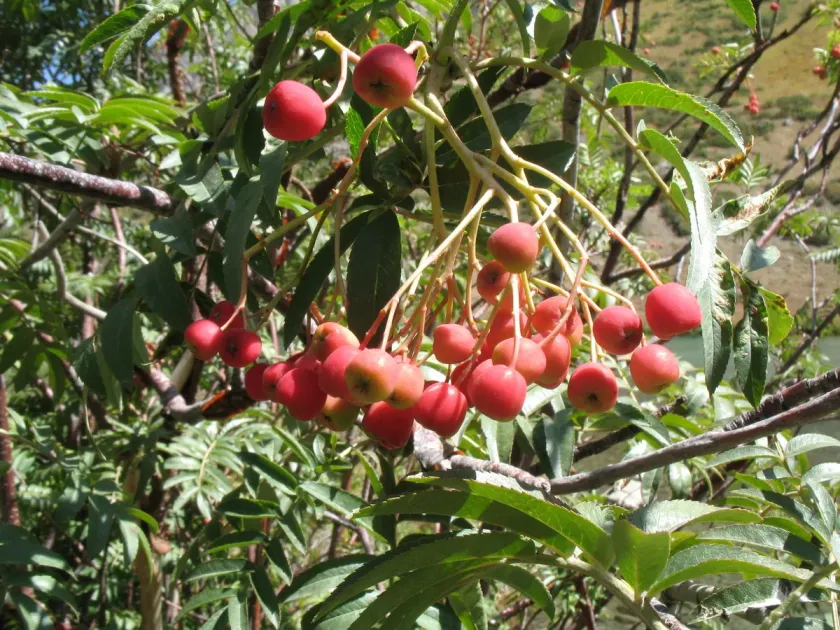
Description
Sowing dates
The propagation of Sorbus tianshanica is typically carried out using seeds. Sowing is recommended in the autumn, immediately after harvesting the ripe fruits, to allow the seeds to undergo natural stratification in the soil throughout the winter months.
If sowing is planned for spring, the seeds require artificial stratification. They should be kept at temperatures between 0 and 5 degrees Celsius for about 3 to 4 months in a moist, well-aerated medium like peat or sand to break dormancy.
Vegetative propagation is also feasible through budding (grafting) onto rootstocks of common mountain ash (Sorbus aucuparia). This procedure is best performed in late summer during the peak sap flow, which ensures a higher success rate for the graft union.
Seedlings need protection during their first year, particularly from direct sunlight, which can cause dehydration. In their second year, they are usually moved to nursery beds to allow for further root system development before being planted in their permanent locations.
Proper spacing is crucial when planting out the seedlings to ensure adequate airflow and light penetration. A distance of at least 2 meters between individual trees is generally recommended to prevent competition and facilitate future maintenance of the trees.
Growing requirements
As a member of the Rosaceae family, the Tian Shan mountain ash is well-adapted to high-altitude environments. It exhibits significant winter hardiness, allowing it to thrive in regions where many other fruit trees might struggle during harsh winters.
The tree prefers deep, well-drained, and nutrient-rich soils. While it can adapt to various soil types, it performs best in loamy substrates with a near-neutral pH. Waterlogged soils should be avoided as they significantly increase the risk of root rot.
Full sun is essential for this species to maintain its dense, attractive canopy and ensure optimal fruit production. While it can withstand partial shade, long-term exposure to low light levels will reduce the tree's vigor and its overall aesthetic appeal.
Water requirements are moderate, but consistent moisture is important during the initial stages of establishment. In areas with dry summers, supplemental irrigation is necessary to prevent stress, especially for younger trees that have not yet established deep roots.
Mulching the root zone with organic matter, such as wood chips or compost, is highly beneficial. This practice helps to retain soil moisture, suppress weed growth, and gradually enrich the soil with nutrients, mirroring the natural forest floor conditions.
Main diseases and pests
Powdery mildew is a primary concern for Sorbus tianshanica, appearing as a whitish dust on the leaves. Management involves proper pruning to improve air circulation and the application of fungicides if the infection becomes widespread during humid seasons.
Rust diseases can also affect the foliage, causing discolored spots and premature leaf drop. Removing infected plant debris during the autumn is a crucial sanitation step to break the lifecycle of the pathogen and prevent reinfection in the following spring.
Aphids represent the most common insect threat, as they feed on the succulent growth of young shoots. Regular monitoring of the canopy is essential, and horticultural soaps or systemic insecticides can be used to control populations when they reach high levels.
Borers and other wood-boring insects may target trees that are already stressed by poor environmental conditions. Maintaining the tree's overall vigor through adequate feeding and avoiding physical damage to the trunk are the best preventive strategies against these pests.
To ensure long-term health, avoid overhead watering, which can create a humid microclimate favorable to many fungal diseases. Instead, direct water to the base of the tree to keep the canopy as dry as possible during the growing season.
Harvesting
Harvesting usually occurs in late summer or early autumn once the berries have reached their full, vibrant color. The fruit clusters should be clipped off carefully to avoid damaging the branches or the fragile stems of the berries themselves.
Post-harvest handling is critical to maintaining fruit quality. Berries should be sorted to remove any damaged or immature specimens and kept in cool, well-ventilated storage conditions until they are processed for culinary use or market distribution.
The fruits of this species are highly valued for their nutritional profile, being rich in antioxidants and vitamins. They are commonly used to produce jams, jellies, and syrups, or they can be dried and stored as a healthy winter supplement.
If the trees are grown primarily for ornamental purposes, the fruit can be left on the branches to provide winter food for local bird populations. This adds significant ecological value to the landscape while maintaining the tree's visual interest.
Following the harvest, a light sanitary pruning can be performed to remove any dead or diseased wood discovered during the gathering process. This practice keeps the tree productive and encourages a robust bloom for the next season.