
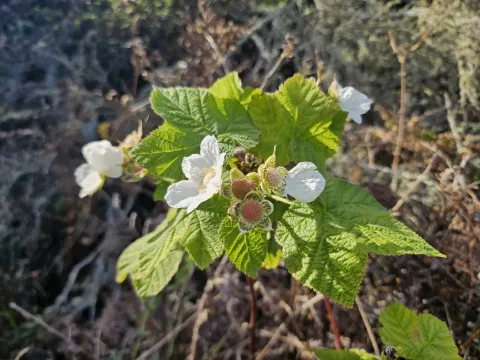
Thimbleberry
Rubus parviflorus
Thimbleberry (Rubus parviflorus) is a deciduous shrub belonging to the Rosaceae family. It is distinct among raspberries for its thornless stems and large, maple-like leaves, which makes it a popular choice for both fruit production and ornamental landscape gardening.
What the section contains
Thimbleberry
Native to western North America, this species thrives in diverse environments ranging from sub-alpine forests to coastal regions. It prefers moist, well-drained soils rich in organic matter and is highly regarded for its ability to colonize disturbed sites and forest edges.
The plant requires a site with partial shade to full sun, depending on the intensity of the summer heat. While it is adaptable to various soil types, maintaining consistent soil moisture is essential for optimal berry production, especially during the fruit-set phase in early summer.
Agricultural management includes regular mulching to suppress weeds and retain soil moisture, as the plant possesses shallow, spreading roots. Pruning should be performed after the harvest, removing old canes that have completed their fruiting cycle to encourage vigorous new growth.
Economically, thimbleberries are highly prized for their unique flavor, often used in artisanal jams, jellies, and desserts. Beyond consumption, the plant serves as a vital ecological component, providing habitat and nectar for pollinators and food for local wildlife populations.
The primary threats to thimbleberry cultivation include fungal diseases, such as powdery mildew and cane blight, which thrive in stagnant, humid air. Ensuring proper plant spacing and airflow is the most effective cultural method for managing these pathogen risks.
Insect pests, such as aphids and leaf-feeding beetles, may occasionally attack the foliage. While usually not fatal to established stands, these pests should be monitored during the early growing season to prevent significant damage to the plant's photosynthetic capacity.