
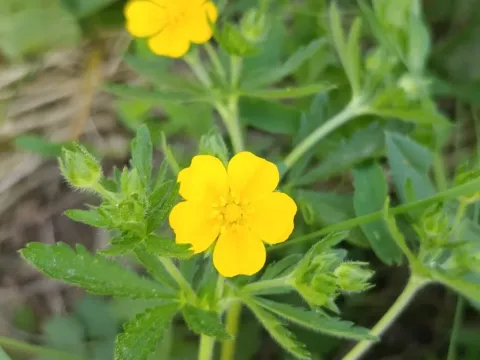
Thuringian cinquefoil
Potentilla thuringiaca
Thuringian cinquefoil (Potentilla thuringiaca) is a perennial herbaceous plant belonging to the Rosaceae family. It is widely distributed across European meadows and grasslands, where it serves as a resilient component of natural vegetative communities.
What the section contains
Thuringian cinquefoil
Botanically, this species is distinguished by its palmate leaves and bright yellow flowers arranged in terminal cymes. Its robust root system allows it to persist under varying soil conditions, demonstrating significant adaptability to different environmental stressors.
The crop thrives in well-drained, moderately fertile soils and requires adequate sun exposure to maximize biomass production. It is highly valued for its winter hardiness and its ability to withstand fluctuating temperatures in continental climates.
Agricultural management of the plant involves ensuring proper seed bed preparation and managing the density of stands to optimize its role in forage mixtures. Given its long lifespan, it provides a stable and reliable source of green mass in perennial pastures.
Economically, Thuringian cinquefoil contributes to the overall stability of forage production. By integrating this hardy perennial into grassland rotations, farmers can maintain soil structure and ensure a consistent nutritional profile for grazing livestock.
Fungal diseases such as rust and leaf spots are the primary threats to crop health, especially during periods of excessive rainfall or poor air circulation. Proper field management is essential to prevent these pathogens from impacting yield quality.
Leaf-feeding insects represent a secondary threat, which can be mitigated through rotational grazing and systematic field inspections. Monitoring pest populations is crucial for maintaining the vigor of the plant throughout the growing season.