
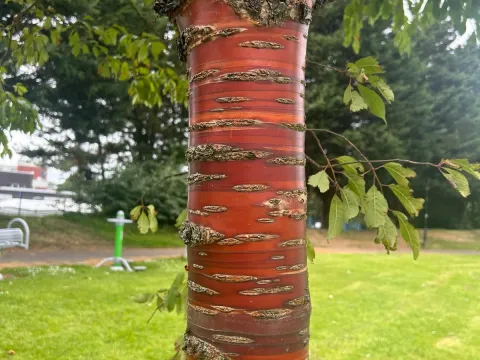
Tibetan Cherry
Prunus serrula
The Tibetan Cherry, scientifically known as Prunus serrula, belongs to the Rosaceae family. It is widely recognized for its exceptional ornamental value, primarily due to its striking, peeling, mahogany-red bark that provides year-round visual interest in the landscape.
What the section contains
Tibetan Cherry
This tree thrives in temperate climates and requires a site with full sun exposure. Adequate light is crucial not only for the tree's vigor but also to ensure the development of the characteristic deep red luster on its trunk.
In terms of soil, Prunus serrula prefers fertile, well-draining loamy soils. It does not tolerate waterlogged conditions, so it is essential to ensure that the planting site has excellent drainage to prevent root rot, especially in heavier soil types.
Agrotechnical maintenance focuses on providing consistent moisture during the establishment phase. While mature trees are relatively drought-tolerant, supplemental watering during prolonged dry spells helps maintain the health and beauty of the bark.
Pruning should be kept to a minimum, focusing mainly on the removal of dead or crossing branches in early spring. It is vital to preserve the natural shape of the tree, as its graceful, light-filtering canopy is one of its most desirable features.
Prunus serrula is susceptible to common stone fruit diseases, with bacterial canker being one of the most serious. This condition often results in sunken lesions on the bark and can lead to the dieback of entire branches if not managed.
Monilinia blossom wilt can severely affect the tree during a wet spring, leading to the rapid wilting and browning of flowers and emerging foliage. Fungicide applications during the flowering stage are recommended in high-risk areas.
Aphids are a frequent pest that targets new growth, potentially causing leaf curling and reduced photosynthesis. Monitoring the undersides of leaves and using insecticidal soaps can manage these populations without harming beneficial insects.
Shot-hole disease causes small holes in the leaves, which can lead to premature leaf drop. While usually not fatal, severe infestations can weaken the tree, making it more vulnerable to secondary infections or environmental stress.
Root health is paramount, and care should be taken to avoid soil compaction around the base of the trunk. Mulching with organic material helps maintain moisture levels and suppress weeds, while keeping the mulch away from the bark prevents rot.