
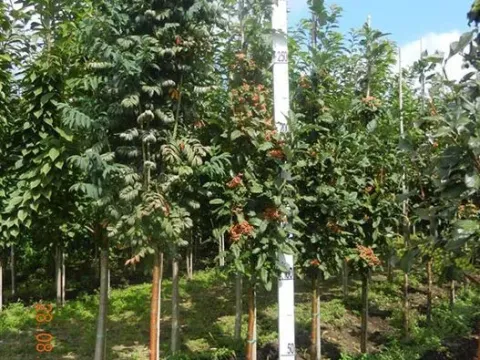
Thuringian whitebeam
Sorbus thuringiaca
The Thuringian whitebeam (Sorbus thuringiaca) is a natural hybrid between Sorbus aucuparia and Sorbus torminalis, belonging to the Rosaceae family. It is a robust tree that combines the best characteristics of its parents, valued for both its fruit and its unique foliage.
What the section contains
Thuringian whitebeam
The tree requires full sun to partial shade for optimal fruit production and healthy growth. While it is adaptable, it thrives best in deep, fertile, and well-drained soils that offer a neutral to slightly acidic pH level.
Proper site preparation involves ensuring the soil is not overly compacted, as the root system requires adequate aeration. The species is known for its high level of hardiness, making it suitable for temperate climates with harsh winters.
Agrotechnical maintenance includes regular irrigation during the first few years after planting, especially in drought-prone areas. Applying mulch around the base of the tree helps retain moisture and suppresses weeds.
Occasional pruning is recommended to maintain a balanced shape and to promote airflow through the crown, which helps prevent the accumulation of moisture and reduces the risk of fungal outbreaks.
Like many trees in the Rosaceae family, the Thuringian whitebeam is susceptible to diseases such as fire blight and powdery mildew. Early detection is key, and prompt removal of infected branches is often the best course of action.
Pest management should focus on common insects like aphids, mites, and leaf miners. Integrated pest management strategies, such as introducing beneficial insects, can effectively control these populations without heavy chemical use.
In humid seasons, the tree may experience issues with fungal leaf spots. Providing adequate spacing between trees and maintaining a clear area around the trunk can significantly improve overall tree hygiene.
Winter injury to the bark, particularly in young trees, can be mitigated by painting the trunk with a white lime-based solution. This prevents sunscald and reduces the hiding places for overwintering pests.
Regular monitoring during the spring bloom is critical to identify early signs of insect activity. Proactive care ensures that the tree remains productive and aesthetically pleasing throughout the growing season.
The harvest period typically occurs in late August or September when the berries have reached their full color. The fruit is harvestable once it becomes soft and sweet, losing its initial astringency.
Harvesting should be done by clipping the fruit clusters with clean shears. This method prevents tearing the wood and ensures that the buds for the following year are not damaged during the process.
Once harvested, the berries are highly versatile and can be used for jellies, preserves, or fermented beverages. Their nutritional profile makes them a valuable addition to the diet, being rich in vitamins and antioxidants.
If not used immediately, the berries can be preserved by drying or freezing. Freezing often enhances the flavor profile of the fruit, making it more suitable for various culinary applications after thawing.
The Thuringian whitebeam also plays a significant ecological role, providing a reliable food source for birds and beneficial insects during the late summer and autumn migration periods.