
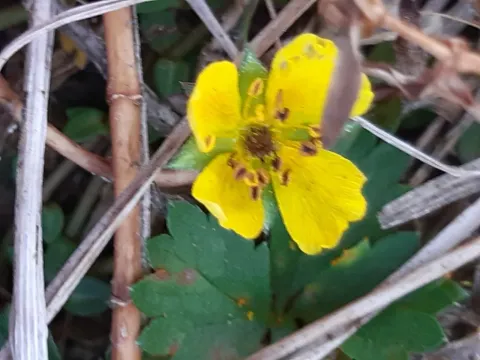
Trailing tormentil
Potentilla anglica
Trailing tormentil (Potentilla anglica) is a perennial herbaceous plant belonging to the Rosaceae family. It is recognized for its creeping growth habit and is often managed in cultivation for its medicinal and ecological properties.
What the section contains
Trailing tormentil
Propagation is most successful through seed sowing in autumn, as the seeds require a period of cold stratification to break dormancy. This mimicry of natural conditions is essential for uniform germination in the spring.
When sowing, the seeds should be placed on the soil surface or covered with a very thin layer of substrate. The soil must be kept consistently moist but not waterlogged during the germination process.
Transplanting seedlings to their final location is best performed in the spring once the danger of hard frost has passed. This allows the root system to establish itself before the onset of high summer temperatures.
A plant spacing of approximately 30 to 40 centimeters is recommended. This provides sufficient room for the sprawling stems to root at the nodes, which aids in the rapid expansion of the crop over the soil surface.
This species thrives in a variety of soil types but prefers slightly acidic to neutral, well-draining loams. It is adaptable to various soil conditions but performs best in substrates rich in organic matter.
Trailing tormentil is a heliophilic plant that demands plenty of sunlight to maintain its vigor and regular flowering. While it tolerates partial shade, excessive shade may reduce its overall biomass production.
The climate requirements align with cool-temperate regions. It is highly winter-hardy and requires no additional protection in zones typical of Western and Central European climates.
Water management is critical during the initial establishment phase. Once the plant has developed a robust root system, it demonstrates moderate drought tolerance, although supplemental watering is beneficial in dry spells.
Fertilization should be kept minimal to avoid over-stimulation of vegetative growth at the expense of root health. A balanced, slow-release fertilizer applied in early spring is usually sufficient to support the plant throughout the growing season.
Pests such as aphids can occasionally colonize the young shoots, necessitating prompt intervention. Biological control methods, such as encouraging natural predators, are highly effective in open-field cultivation.
Fungal diseases like powdery mildew are the most common health issues for this crop. Improving air circulation around the foliage is the primary defense strategy to keep the plant canopy dry.
Root rot caused by poor soil drainage can significantly weaken the plant. Ensuring the planting site is elevated or has improved drainage capacity is a necessary preventative step.
Rust infections on the leaves can occur in periods of high humidity and poor ventilation. Infected material should be pruned and removed from the cultivation area to prevent further spore dispersal.
Monitoring the plant for early signs of chlorosis or stunted growth helps in identifying potential nutrient deficiencies or underlying pest infestations before they spread across the plot.