
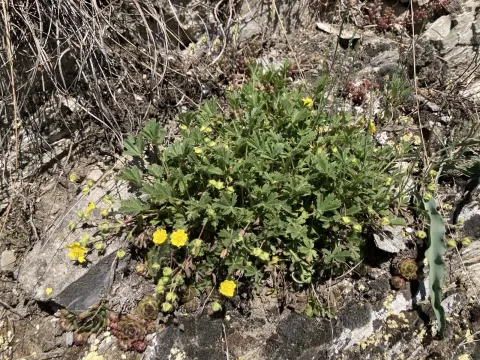
Potentilla pusilla
Potentilla pusilla
Potentilla pusilla, belonging to the Rosaceae family, is a miniature perennial plant native to the mountain regions of Europe. It is widely recognized for its adaptation to alpine and sub-alpine environments characterized by stony soils and high ultraviolet exposure.
What the section contains
Potentilla pusilla
Botanically, this species is noted for its low-growing, mat-forming habit, typically staying under 10 centimeters in height. Its foliage is palmately compound and often covered in fine pubescence, which serves as a protective mechanism against drought and intense light.
In terms of climatic requirements, it thrives in well-lit, sunny positions. Exposure to full sunlight is essential for maintaining its compact form and ensuring prolific blooming during the spring and early summer months.
The plant demonstrates high soil adaptability provided the drainage is excellent. It favors gritty, sandy, or neutral-to-alkaline substrates. It does not tolerate waterlogged, heavy soils, which can lead to physiological stress and rot.
Host use of Potentilla pusilla is primarily ornamental. It is highly sought after by landscape designers for rock gardens, trough gardens, and stone wall crevices, where it functions as a durable, low-maintenance groundcover.
Root rot is the most significant threat to the survival of Potentilla pusilla. It occurs primarily when the plant is situated in soil that holds moisture for extended periods, especially during the dormant winter season.
Powdery mildew represents another common fungal issue, particularly in humid climates with poor air circulation. The pathogen creates a dusty white film on the leaves, which significantly impacts the plant's metabolic health.
Pests such as aphids and spider mites may infest the plant during prolonged dry spells. These pests weaken the plant by sucking nutrients, often leading to discoloration and stunted development of the delicate foliage.
Management strategies include applying appropriate fungicides for mildew control and monitoring for insect infestations. Keeping the area free of debris helps prevent fungal spores from overwintering.
Providing adequate spacing between plants is crucial to facilitate airflow, which acts as a natural deterrent against most humidity-related fungal threats and ensures the longevity of the planting.