
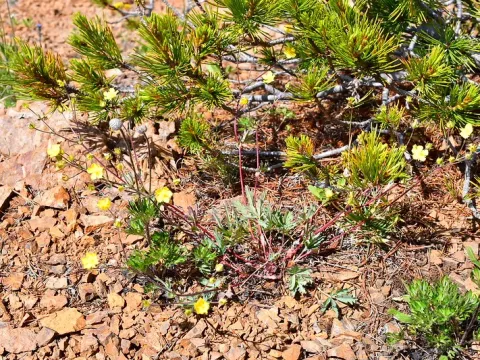
Diverse-leaved cinquefoil
Potentilla diversifolia
Diverse-leaved cinquefoil (Potentilla diversifolia) is a robust perennial herb belonging to the Rosaceae family. It is native to the mountainous regions of North America, where it thrives in rocky, subalpine, and alpine meadow environments.
What the section contains
Diverse-leaved cinquefoil
Botanically, the plant is characterized by its palmately compound leaves that exhibit significant variation in shape, hence its name. It typically produces yellow, bowl-shaped flowers, which makes it a popular choice for rock gardens and naturalistic landscaping projects.
The culture requires well-drained, gritty, or sandy soils to mimic its natural habitat. It does not tolerate heavy, clay-rich, or waterlogged soils, which lead to root asphyxiation. Proper drainage is the most critical factor for successful establishment.
Environmental requirements include full sun exposure for optimal growth and flowering. While it is highly cold-hardy, the plant prefers cool summers and is generally not suited for hot, humid lowland areas where it may struggle to survive seasonal heat stress.
In terms of agricultural and horticultural utility, Potentilla diversifolia serves as an excellent ground cover for slopes and areas with thin, poor soil. Its root system helps in soil stabilization and erosion control, making it both beautiful and functional.
The primary threats to Potentilla diversifolia involve fungal pathogens, particularly when the plants are grown in poor environmental conditions. Powdery mildew is common in stagnant, humid air during the late summer months.
Root rot is the most devastating condition, usually triggered by excessive irrigation or poor soil structure. If the soil remains consistently damp, the root system will decay, leading to a rapid decline of the entire plant.
Insect pests such as spider mites are significant problems, especially during extended periods of drought. These pests feed on the foliage, causing discoloration and eventual drop of leaves if left untreated.
Aphids can also occasionally colonize new growth, weakening the plant's vigor. Regular inspection and the application of insecticidal soaps or horticultural oils can help manage these infestations effectively.
To prevent disease outbreaks, gardeners should ensure proper spacing between individual plants to promote airflow and avoid overhead watering in the evenings, which keeps the foliage moist and encourages fungal growth.