
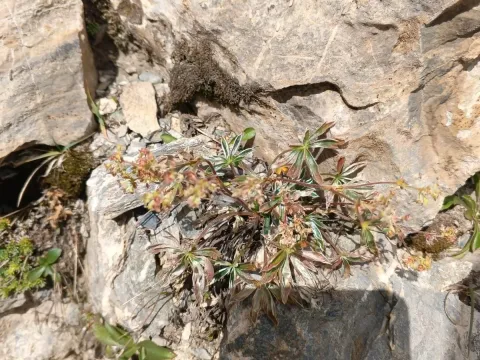
Silk lady's mantle
Alchemilla sericea
Silk lady's mantle (Alchemilla sericea) is a perennial herbaceous plant belonging to the Rosaceae family. Native to the high-mountain regions of the Caucasus, this species has adapted to survive in harsh, rocky alpine environments.
What the section contains
Silk lady's mantle
The plant is highly regarded for its distinctive, silvery-pubescent foliage that forms low-growing, compact cushions. This unique appearance makes it a popular choice for rock gardens and alpine-style landscaping.
When cultivating this plant, providing excellent drainage is critical. Like many mountain species, it will struggle if the roots remain wet for extended periods, making sandy or rocky soil compositions ideal.
It prefers sunny locations, which helps maintain the vibrancy of its silvery leaf hairs. However, in warmer climates, it can tolerate partial shade to avoid heat stress during mid-summer afternoons.
The plant is generally hardy and can withstand freezing temperatures, making it a reliable perennial for gardeners in temperate regions. It is relatively low-maintenance once established, effectively suppressing weeds in its vicinity.
Propagation of Alchemilla sericea is typically achieved through seeds or division of the rootstock. Sowing seeds in autumn allows them to undergo natural stratification during the winter, which is essential for germination.
When sowing in containers, use a light, well-draining potting mix and keep the surface barely covered with soil. Ensure the seeds are kept consistently moist but not waterlogged until germination occurs.
Division is the preferred method for propagating mature, healthy clumps. This should be performed in early spring or autumn by carefully digging up the plant and separating the root mass into smaller sections.
When transplanting into the garden, provide each plant with sufficient space—ideally 30 to 40 centimeters apart—to allow for air circulation. This reduces the risk of fungal infections within the dense foliage.
Young plants require supplemental watering during their first season. Once fully established, the plant exhibits moderate drought tolerance, though it thrives best with consistent moisture during prolonged dry spells.
Alchemilla sericea is naturally resistant to many common pests, though it can occasionally suffer from fungal issues. Powdery mildew is the most common problem, often triggered by high humidity and poor air circulation.
In overly damp or waterlogged conditions, crown rot or gray mold may affect the base of the plant. Ensuring the soil drains rapidly and that old, dead foliage is removed annually will significantly reduce these risks.
Pests such as aphids or lepidopteran larvae may occasionally feed on the foliage. While these rarely pose a terminal threat, manual removal or the application of insecticidal soap is usually sufficient to resolve the issue.
To keep the plants healthy, it is essential to monitor the site for signs of stress, such as yellowing leaves or wilting. These symptoms are almost always related to soil drainage or water-logging rather than pathogens.
In cases of severe fungal infestation, standard garden fungicides can be used. However, most growers find that proper plant spacing and careful watering practices are far more effective in preventing diseases before they begin.