
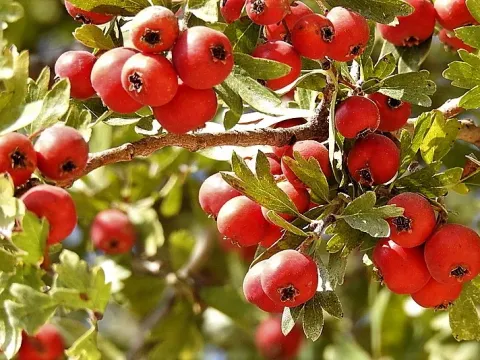
Sinai hawthorn
Crataegus sinaicus
Sinai hawthorn (Crataegus sinaicus) is a distinct member of the Rosaceae family, naturally occurring in arid and semi-arid environments. It serves as a hardy shrub or small tree, adapted to rocky and limestone-rich terrains.
What the section contains
Sinai hawthorn
This species is highly valued for its drought tolerance and resilience in harsh, hot climates. It thrives in well-drained soils where most traditional fruit crops would fail, specifically preferring alkaline or sandy substrates.
Exposure to full sunlight is essential for this plant. It requires open areas with no shading to maintain its structural health and ensure optimal fruit production during the summer cycle.
Agricultural techniques focus on minimal irrigation once the plant is established. The root system is naturally deep, allowing the plant to reach moisture stored in rock fissures or lower soil layers.
The fruit of the Sinai hawthorn is traditionally used for its nutritional value and medicinal properties, contributing to its potential as a sustainable crop in arid regions globally.
The main threats to Sinai hawthorn include fungal pathogens such as powdery mildew, which occur primarily when plants are exposed to improper soil humidity levels.
Insect pests, including aphids and various leaf-eating beetles, can cause significant damage to young shoots, potentially impacting the plant's overall growth rate.
Root rot is a critical concern, usually resulting from poor site selection where water accumulates near the base of the tree for extended periods.
Mechanical damage from rodents can jeopardize the tree's health, making it susceptible to secondary infections or severe dehydration in the arid environment.
Effective management requires maintaining proper spacing between plants and ensuring high levels of soil aeration to prevent the buildup of pathogens near the root zone.