
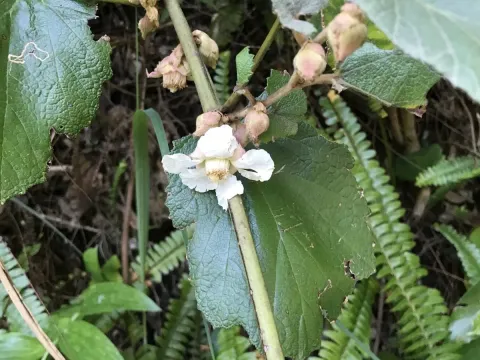
Siebold's raspberry
Rubus sieboldii
Siebold's raspberry (Rubus sieboldii) is an evergreen perennial shrub belonging to the Rosaceae family. Native to the warm and humid regions of East Asia, including Japan and coastal parts of China, it thrives in environments that offer moderate year-round temperatures.
What the section contains
Siebold's raspberry
The plant is distinguished by its leathery, evergreen leaves, which set it apart from the majority of deciduous Rubus species. Its stems are robust and often covered with fine hairs, allowing the plant to form dense, spreading thickets in its natural habitat.
Successful cultivation requires a location with high humidity and protection from cold winds. Due to its limited frost tolerance, it is typically grown in greenhouses or as a conservatory plant in regions with cold winters, rather than in open fields.
The ideal soil for this species is well-drained, fertile, and slightly acidic. It is sensitive to waterlogging, so providing a substrate that retains moisture without remaining saturated is essential for root health.
Agricultural management involves regular watering and consistent fertilization during the active growth season. Because it retains its foliage throughout the winter, the plant needs sufficient ambient light, even during shorter winter days, to maintain its health and color.
The primary utility of Rubus sieboldii is ornamental. It is highly valued in horticulture for its evergreen architecture, making it a unique addition to botanical gardens and controlled landscape settings in temperate climates.
The plant produces edible fruit, although they are generally smaller and less flavorful than the commercial raspberries found in supermarkets. Yields are inconsistent and not intended for mass-market production.
Fruit ripening usually occurs during late summer and autumn. While the berries are acceptable for fresh consumption by hobbyist gardeners, they are more often appreciated for their novelty value rather than culinary output.
Research into the phytochemical properties of the fruit is limited, but they contain various antioxidants similar to other berries in the Rubus genus. They are sometimes used locally for preparing infused drinks or light refreshments.
From a breeding perspective, this species is a subject of interest for genetic research aimed at exploring characteristics such as evergreen foliage, which could potentially be hybridized into commercial berry crops.
Fungal pathogens represent the most significant threat to Siebold's raspberry, particularly under conditions of poor air circulation. Diseases like powdery mildew and leaf spot can severely impact the plant's aesthetic value.
Pests such as spider mites and aphids are known to colonize the evergreen leaves, necessitating regular monitoring. Integrated pest management strategies are often required to maintain the health of the plants in indoor environments.
Improper watering practices frequently lead to root rot. Ensuring that the soil structure provides adequate aeration is the most effective preventative measure against the decline of the plant's root system.
Viral infections can be transmitted through improper vegetative propagation. Maintaining high phytosanitary standards when selecting parent plants is crucial to avoid systemic health issues within a cultivation collection.
Environmental stress, particularly sudden changes in temperature or insufficient humidity in heated indoor spaces during winter, can cause premature leaf drop, weakening the plant and increasing susceptibility to opportunistic infections.