
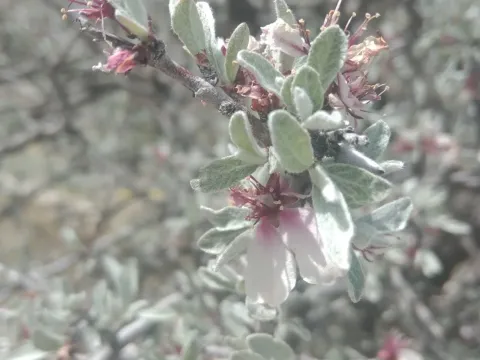
Silver cherry
Prunus argentea
Silver cherry (Prunus argentea) is a deciduous shrub or small tree belonging to the Rosaceae family. It is distinct for its grayish-silver foliage, which gives the plant its common name and makes it a unique addition to both orchards and xeriscape landscapes.
What the section contains
Silver cherry
The natural habitat of this species is spread across the regions of Western and Central Asia. It thrives in high-altitude environments, rocky slopes, and well-drained soils, showing a remarkable resilience to harsh environmental conditions that would be detrimental to common cherry varieties.
When it comes to soil requirements, Prunus argentea is highly versatile. It performs well in alkaline, stony, and nutrient-poor soils. The primary prerequisite for successful cultivation is excellent drainage, as the roots are sensitive to waterlogging and anaerobic soil conditions.
This species is exceptionally drought-tolerant once established, making it suitable for regions with limited rainfall. It requires high exposure to sunlight to maintain the vibrancy of its silvery leaves and to encourage healthy flower bud formation during the spring season.
Cultural practices are relatively straightforward, focusing mainly on structural pruning to maintain air circulation. Because the plant naturally forms a bush-like habit, gardeners often prune it into a standard tree shape to facilitate easier harvest and maintenance of the plant's overall health.
The primary health concerns for silver cherry include fungal diseases such as leaf spot (coryneum blight) and monilinia, particularly in climates with high humidity or spring rainfall. These pathogens can compromise the foliage and lead to fruit rot if not properly managed.
Insect pests include cherry fruit fly, aphids, and various scale insects that thrive in neglected or poorly managed orchards. Monitoring for early signs of infestation is crucial, as pests can weaken the plant and serve as vectors for viral and bacterial diseases.
Effective management strategies rely on integrated pest management (IPM). This includes the removal of mummified fruits and dead branches, which can harbor overwintering fungal spores and insect larvae, effectively reducing the pressure for the following growing season.
Application of horticultural oils or fungicides should be timed with the phenological stages of the plant. Preventive treatments applied during the dormant season are often effective in reducing the initial population of overwintering pests and dormant fungal spores.
Maintaining vigorous plant health through appropriate spacing and avoiding excessive nitrogen fertilization helps keep the trees resilient. Proper canopy management ensures that sunlight reaches all parts of the tree, creating an environment less favorable for disease development.