
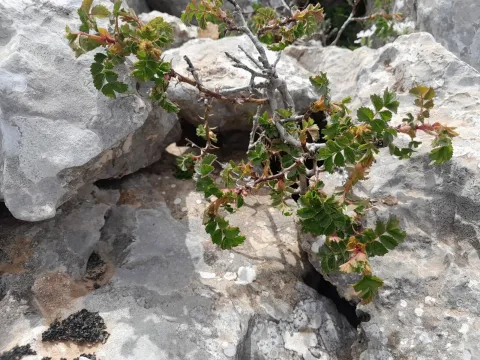
Sicilian rose
Rosa sicula
Rosa sicula, commonly known as the Sicilian rose, belongs to the Rosaceae family. This perennial shrub is recognized for its adaptation to Mediterranean climates, where it grows in rocky and calcareous terrains.
What the section contains
Sicilian rose
The plant thrives in well-drained, nutrient-poor soils. It is particularly valued for its natural drought resistance, which makes it a model species for studying water-stress tolerance in roses.
Botanically, it features small, hardy leaves and prickly stems that provide protection against herbivores. Its flowers, typically singular and small, maintain a delicate aesthetic characteristic of Mediterranean flora.
Climatic requirements focus on high solar radiation and low relative humidity. The species is not suited for waterlogged areas, as its root system is prone to crown rot under conditions of poor drainage.
Agriculturally, Rosa sicula is primarily used as genetic stock for breeding programs. It serves as a source for developing hardy, drought-tolerant rose rootstocks for commercial nurseries.
Powdery mildew is the most common fungal disease affecting this species during seasons with high humidity. Proper spacing between plants is essential to prevent air stagnation and pathogen development.
Aphids frequently colonize the tender tips of the plant during early spring. While the plant is resilient, heavy infestations can reduce its overall vigor and should be monitored.
Spider mites are a potential threat during extended summer heatwaves. They damage the foliage by extracting cell sap, leading to chlorosis and premature leaf drop in severe cases.
Rust fungi may occasionally manifest on the foliage during rainy periods. Ensuring that the foliage dries quickly after rain is a key preventive cultural practice for managing this issue.
Root zone pests, such as soil-borne larvae, can weaken young specimens. Implementing a strict site preparation regimen including soil aeration and sanitation is recommended to reduce these threats.