
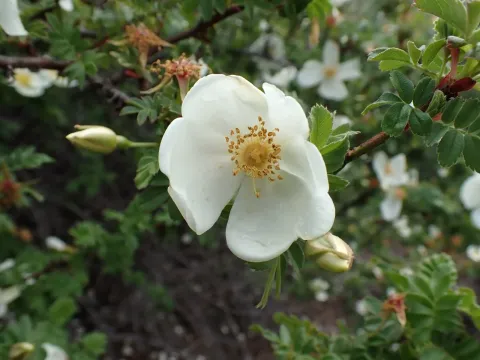
Silky rose
Rosa sericea
Rosa sericea, commonly known as the Silky rose, is a distinctive shrub species belonging to the Rosaceae family. It is native to the mountainous landscapes of the Himalayas and Western China, thriving in high-altitude environments often exceeding 4,000 meters.
What the section contains
Silky rose
Botanically, this species is unique because its flowers possess only four petals, deviating from the typical five-petal structure of most rose varieties. The canes are particularly notable for their large, flat, and sometimes translucent prickles, which provide significant year-round architectural interest.
To cultivate the Silky rose successfully, one must provide well-drained, nutrient-rich soil. It is an extremely hardy plant that prefers sunny positions but can tolerate partial shade, making it a versatile choice for diverse landscape projects.
Agronomic management involves periodic mulching to suppress weeds and retain soil moisture during the establishment phase. While very tolerant of cold climates, the shrub requires protection from waterlogging, which is essential to prevent root system degradation.
The primary use of Rosa sericea is in ornamental gardening and landscape architecture. Due to its unique stem morphology and frost tolerance, it is frequently utilized in cold-climate gardening to create naturalistic hedges and structured rock gardens.
The Silky rose is susceptible to common fungal pathogens like powdery mildew and black spot, especially in environments where air circulation is restricted. Pruning practices are essential to maintain an open canopy and reduce disease pressure.
Pests such as aphids and spider mites can infest the foliage, particularly during dry spells. Integrated pest management, including the use of neem oil or biological predators, is highly recommended to protect the plant's aesthetic value.
Root rot remains a significant threat if the planting site is poorly drained. Ensuring a sloped planting area or adding inorganic amendments like grit or sand can significantly mitigate these risks.
Regular sanitation, which includes removing dead or diseased wood, is critical to preventing the spread of pathogens throughout the shrub. Maintaining plant health through proper nutrition is also a key defense against pest outbreaks.
- Maintain adequate spacing between shrubs.
- Monitor for early pest signs.
- Improve soil drainage before planting.