
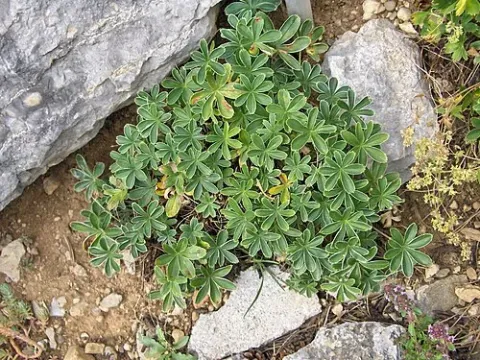
Painted Lady's Mantle
Alchemilla colorata
Alchemilla colorata, known as Painted Lady's Mantle, is a perennial herbaceous plant from the Rosaceae family. It is typically propagated through seeds or by dividing mature plant clumps during the early spring or late autumn.
What the section contains
Painted Lady's Mantle
Seed sowing is best performed in late autumn to allow for natural stratification, which significantly increases germination rates. If planting in spring, seeds should be pre-chilled in a refrigerator for several weeks to break dormancy.
For large-scale cultivation, shallow sowing (no more than 0.5 cm) is recommended, as seeds require light to germinate effectively. The seeds should be covered with a very thin layer of fine soil or vermiculite.
Vegetative propagation via root division is often preferred for maintaining the specific characteristics of the cultivar. Dividing the plant every 3–4 years keeps the population vigorous and prevents center-dieback in older clumps.
Optimal spacing should be around 30-40 cm between plants. This density allows for adequate air circulation, which is crucial for preventing fungal issues in the dense foliage of the plant.
Painted Lady's Mantle thrives in temperate climates and is highly tolerant of cold temperatures. It is well-suited for various soil types, but prefers moist, well-draining, and nutrient-rich soils.
While it prefers full sun, it shows good tolerance for partial shade, making it a flexible crop for different field conditions. In hotter climates, partial shade is necessary to prevent leaf scorching during the peak of summer.
The plant requires consistent soil moisture. In drought-prone regions, supplemental irrigation is essential during the active growing season to ensure robust leaf production.
Soil pH should ideally remain between 6.0 and 7.5. Although the plant is not overly demanding, regular application of compost or well-rotted manure helps maintain the soil structure and nutrient levels.
Regular maintenance involves keeping the rows free of weeds during the first season of growth, as the plant can be slow to establish its canopy. Once mature, it effectively shades out most competing weeds.
The harvestable part of Alchemilla colorata is its foliage, which is sought after for its chemical properties, including tannin and flavonoid content. High yields are achieved by harvesting at the start of the full flowering phase.
The plant is capable of multiple harvests within a single growing season. After the initial cut, if the weather is favourable and sufficient moisture is provided, the plant will regenerate quickly.
Productivity peaks on second and third-year plantations. Proper spacing and soil fertility management significantly impact the overall tonnage of green biomass harvested per hectare.
Drying the biomass immediately after harvest is essential to prevent degradation of active compounds. Properly managed crops produce a high-quality, fragrant raw material that meets industry standards.
- Harvest during peak flowering.
- Annual yield depends on moisture management.
- Productive lifespan is 5–7 years with proper care.
The primary threats to Alchemilla colorata include powdery mildew and other fungal pathogens that flourish in stagnant, humid air. Good field hygiene and ventilation are the best preventative measures.
Aphids and various leaf-feeding beetles are the most common pests. Integrated pest management strategies, focusing on biological controls, are recommended for medicinal and food-grade production.
Root rot occurs if the soil becomes waterlogged. Ensuring that the site has adequate drainage and that the plants are not overcrowded is vital to prevent root-level infections.
Avoiding high-nitrogen fertilizers that cause overly succulent growth can also help reduce the plant's susceptibility to insect attacks and fungal infections.
Regularly clearing plant debris from the fields at the end of the season reduces the overwintering sites for pests and pathogens, keeping the plantation healthy for the following year.
Harvesting is performed by cutting the stems close to the base of the plant. Using sharp, clean equipment ensures that the plant recovers quickly and produces healthy regrowth.
The harvested material must be kept cool and dry until processing. If left in large, damp piles, the leaves can heat up and lose their quality, rendering them unsuitable for high-end markets.
Drying should take place in a well-ventilated, shaded area. Spread the leaves in thin layers to facilitate even drying, which helps in retaining the plant's natural green color and therapeutic properties.
Once dried to a crisp texture, the leaves and stems are sorted to remove any unwanted debris or discolored parts, ensuring a high-purity final product.
Final storage must be in a cool, dark, and dry environment. Utilizing breathable packaging materials like paper or woven bags protects the product from moisture and mold during storage or transit.