
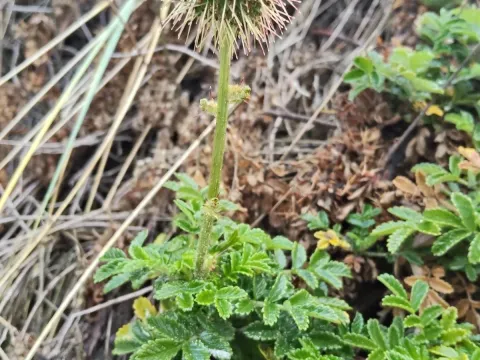
Pale acaena
Acaena pallida
Pale acaena (Acaena pallida) is a perennial ground-covering herb belonging to the Rose family (Rosaceae). It forms dense, mat-forming carpets of intricate, pinnate leaves, making it a popular choice for rock gardens and ground stabilization.
What the section contains
Pale acaena
Native to New Zealand, this plant is naturally adapted to coastal environments, including sandy dunes and rocky substrates. Its evolutionary history has made it tolerant of diverse climatic conditions and poor soil quality.
Successful cultivation requires full sun to partial shade and exceptionally well-drained soil. It thrives in sandy or gritty soil types, which mimic its natural habitat and prevent the moisture retention that the plant finds detrimental.
The plant is valued for its hardiness and evergreen foliage that remains attractive throughout the seasons. It spreads through creeping stems that root at the nodes, allowing it to colonize available space and form a weed-suppressing carpet.
In landscaping, it is used as a functional ground cover, especially for areas where foot traffic is minimal. Its ability to withstand salt-laden winds makes it an excellent choice for coastal gardens or exposed slopes.
The most significant threats to Pale acaena are fungal pathogens such as root rot, often triggered by waterlogged conditions. Ensuring a high level of soil permeability is the most effective preventative measure against these diseases.
While the plant is generally pest-resistant, it can occasionally be affected by aphids or spider mites during periods of drought stress. Maintaining moderate soil moisture and proper ventilation between plants helps minimize these risks.