
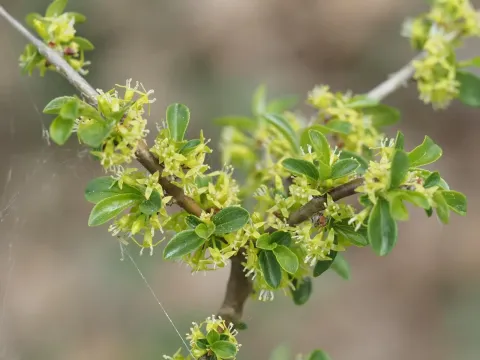
Rock buckthorn
Rhamnus saxatilis
Rock buckthorn is a deciduous shrub belonging to the Rhamnaceae family. It is naturally adapted to rocky habitats and limestone soils, primarily found in various mountainous regions across Europe.
What the section contains
Rock buckthorn
This species is characterized by its high drought tolerance and slow-growing nature, making it suitable for low-maintenance landscapes. It thrives in poor, rocky, or gravelly soils where few other shrubs can survive.
Regarding climate, Rhamnus saxatilis is fully hardy. It can withstand severe winters and thrives under full sun, which is necessary to maintain its natural, compact shape and promote healthy foliage growth.
In terms of soil preparation, excellent drainage is the absolute priority. The plant does not tolerate waterlogged conditions, which lead to root suffocation and eventual decline of the plant health.
Agrotechnical maintenance is minimal. Periodic light pruning to remove dead or overlapping branches is recommended to maintain the structure. No heavy fertilization is required, as the shrub is adapted to nutrient-poor environments.
Aphids are the most common pests affecting new growth during the spring season. While usually not fatal, severe infestations can stunt development and should be managed with mild interventions.
Fungal infections, such as leaf spots, may occur if the shrub is planted in an area with poor air circulation. Proper spacing between plants is essential to minimize the risk of humidity-related issues.
Root rot is the most significant threat to the plant's longevity, occurring almost exclusively due to poor soil drainage. Ensuring that the planting site has a proper drainage slope is the best preventative strategy.
Scale insects can occasionally infest the stems, extracting sap and weakening the overall vigor of the shrub. Manual removal or appropriate horticultural oils are effective solutions for small infestations.
During the dormant season, protection against voles or rodents is advisable to prevent bark damage, which can make the shrub susceptible to secondary pathogens and climate stress.