
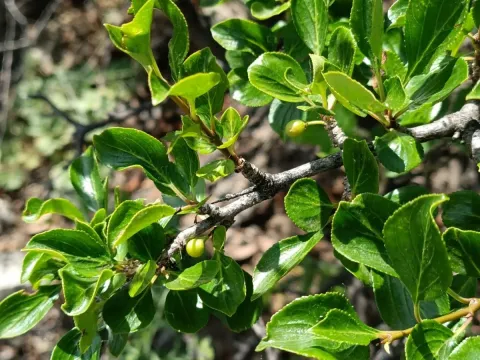
Little-leaf buckthorn
Rhamnus parvifolia
Little-leaf buckthorn is propagated either by seed or through vegetative cuttings. Seeds require cold stratification for at least 3 to 4 months to break dormancy and ensure high germination rates.
What the section contains
Little-leaf buckthorn
For direct seeding, it is best to sow in late autumn, allowing the natural winter cycle to act as a stratification period. If sowing in the spring, ensure seeds are pre-treated to encourage uniform emergence.
Vegetative propagation uses semi-hardwood cuttings collected after the growing season. These should be placed in well-drained, sandy rooting media to prevent fungal rot during the rooting phase.
Young seedlings require intensive care during their first year, including consistent moisture and light fertilization. Transitioning them to a nursery setting helps improve survival rates before final field planting.
Final transplanting to the field should occur during early spring or late autumn when the plant is dormant. Proper spacing is essential to allow for crown development and easier management.
Belonging to the Rhamnaceae family, Rhamnus parvifolia is a deciduous shrub native to East Asia. It is well-adapted to temperate climates and demonstrates strong frost tolerance.
The plant thrives in well-drained, neutral to slightly acidic soils. It is particularly sensitive to waterlogging, so site selection should prioritize raised or naturally sloping ground to ensure proper drainage.
Sunlight is critical for the production of secondary metabolites in the bark. While it can survive in partial shade, optimal growth and pharmaceutical quality are achieved in full-sun conditions.
Little-leaf buckthorn is moderately resilient to drought once established, though supplemental irrigation is recommended during prolonged dry spells to maintain consistent biomass production.
Maintenance involves minimal intervention compared to other crops. Organic mulching around the base helps retain soil moisture and suppresses weed competition during the early growth stages.
The primary economic output of this crop is the bark, which is highly valued for its anthraquinone content. It serves as a raw material for various pharmaceutical and medicinal products.
Yield depends heavily on the age of the shrubs. Harvesting is typically delayed until the plants reach 5 to 8 years of age, ensuring the bark is sufficiently thick and rich in active compounds.
Regular pruning cycles are essential to manage plantation productivity. By removing older branches, the grower stimulates the production of younger stems, which are easier to harvest and process.
While often grown for medicinal purposes, the plant also serves as an ornamental asset. Its hardiness and aesthetic form make it a versatile choice for professional landscaping.
Sustainable harvesting practices, such as strip-barking, allow for long-term plantation health. By allowing the plant time to regenerate between harvests, producers ensure consistent annual returns.
Common phytosanitary issues include rust fungi and powdery mildew. These diseases typically manifest in poorly ventilated or excessively dense plantings where humidity levels are high.
Aphids and leafhoppers are the most frequent insect pests. They feed on succulent new growth, which can stunt the shrub's development and reduce the overall quality of the bark.
Integrated Pest Management (IPM) is the best approach. This includes periodic thinning of branches to improve air circulation and using targeted biological sprays only when necessary.
Weed control is also essential, as surrounding vegetation can harbor pests and compete for essential soil nutrients, thereby weakening the primary crop’s defense systems.
Regular field scouting is recommended to identify early signs of stress. Early intervention effectively prevents the spread of pathogens throughout the plantation area.
Harvesting is traditionally performed in early spring during the peak of sap flow. At this time, the bark is most flexible and peels away from the wood with minimal damage.
Post-harvest processing involves rapid drying to prevent fermentation or mold growth. Drying should occur in controlled environments with adequate ventilation to preserve chemical stability.
Once dried, the bark is inspected for impurities such as debris or rot. Maintaining high standards during the drying phase is critical for meeting international pharmaceutical requirements.
Storage requires cool, dry conditions with low humidity. Properly packed materials in breathable containers can remain stable and effective for several years of inventory life.
Efficient logistics from field to dryer are crucial. Reducing the time between harvest and initial drying helps to maximize the concentration of active medicinal components.