
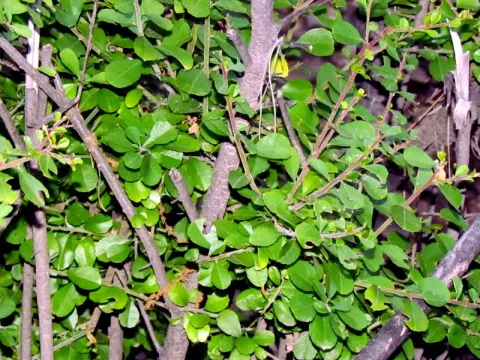
Lebanese buckthorn
Rhamnus libanotica
Lebanese buckthorn (Rhamnus libanotica) is a perennial shrub belonging to the Rhamnaceae family. It is native to the mountainous regions of the Levant, particularly Lebanon and surrounding areas, where it thrives in rocky terrain and moderate altitudes.
What the section contains
Lebanese buckthorn
Botanically, this species is a deciduous shrub characterized by dense foliage and small, inconspicuous flowers. The leaves are typically ovate and arranged alternately on the branches, providing the plant with excellent resilience against harsh environmental conditions.
The plant requires well-drained soil, ideally with a neutral to slightly alkaline pH level. It is naturally adapted to mineral-rich but relatively thin soils, meaning it does not demand heavy fertilization, although it benefits from adequate drainage to prevent root rot.
Climate requirements include exposure to ample sunlight and protection from severe frost. While it is quite drought-tolerant once established, the plant performs best when it receives sufficient moisture during the spring growing season to ensure vigorous development.
In terms of economic and practical use, the plant is valued for its potential in xeriscaping and as a source of botanical compounds. Historically, the genus Rhamnus has been recognized for its medicinal applications, and the Lebanese buckthorn continues to be a subject of interest in pharmaceutical research.
Fungal diseases, specifically leaf rusts, can become an issue if the planting site lacks proper air circulation. Maintaining proper spacing between individual bushes and avoiding overhead irrigation can significantly mitigate these risks during humid periods.
Pest threats primarily include aphids and leaf-eating beetles that target new growth during the spring. Monitoring the plants regularly allows for early detection of these pests, while cultural practices like maintaining plant vigor help the buckthorn resist infestations.