
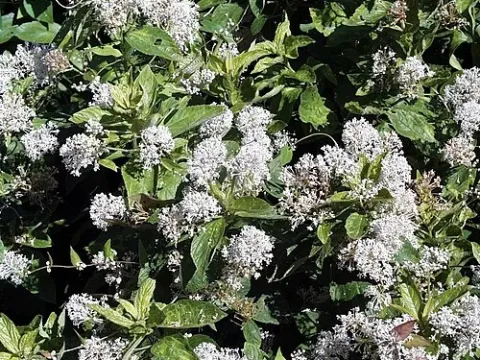
Mendocino ceanothus
Ceanothus mendocinensis
Mendocino ceanothus (Ceanothus mendocinensis) is an evergreen shrub belonging to the Rhamnaceae family. Native to the coastal regions of Northern California, it is well-adapted to Mediterranean-style climates.
What the section contains
Mendocino ceanothus
The crop thrives in well-drained, sandy or gravelly soils. It is highly intolerant of waterlogged conditions, which lead to rapid root decay and plant mortality, making proper drainage the primary agrotechnical priority.
Climate requirements include plenty of sunlight and exposure to open air. While it prefers mild temperatures, the shrub can tolerate some degree of frost once established, though extreme winter conditions are detrimental.
Irrigation management is critical; young plants need occasional watering during the first season. Once the root system is fully developed, the plant becomes exceptionally drought-tolerant and requires minimal maintenance.
In terms of soil nutrition, this species is known for its ability to thrive in nutrient-poor substrates, as it often establishes symbiotic relationships with nitrogen-fixing bacteria in its native habitat.
The most significant pathological threat to Ceanothus mendocinensis is the pathogen Phytophthora, which thrives in overly wet soil environments and attacks the root system.
Insect pests such as aphids and leafhoppers are frequently observed on new growth, causing leaf curling and reduced photosynthesis. Monitoring these populations is essential for crop health.
Caterpillars of various lepidopteran species may cause defoliation, particularly during the active spring growing phase. Manual control or biological sprays are often sufficient for small-scale cultivation.
Powdery mildew can occur in areas with high humidity or poor air circulation within the shrub canopy. Pruning to ensure good airflow is the most effective cultural control method.
To maintain plant vitality, it is crucial to avoid excessive nitrogen fertilization, as it may cause weak, susceptible growth that attracts pests and makes the plant vulnerable to infections.