
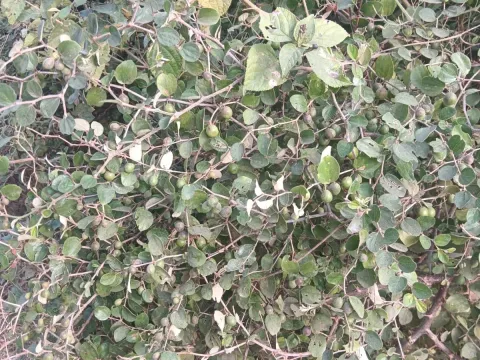
Jujube
Ziziphus Mill.
Jujube (Ziziphus Mill.) is a genus of deciduous trees and shrubs belonging to the Rhamnaceae family. Originating from regions ranging from Southern Europe to Southern and Eastern Asia, this crop is widely cultivated for its highly nutritious, date-like fruits, often referred to as Chinese dates.
What the section contains


Jujube
The plant is exceptionally well-adapted to arid and semi-arid climates, thriving in areas with intense heat and long, sunny growing seasons. It is remarkably hardy, with established trees capable of surviving sub-zero temperatures, making it a versatile choice for various temperate and subtropical gardens.
Soil requirements for jujube are minimal compared to other fruit trees. It thrives in well-drained, sandy or loamy soils and can even tolerate slightly alkaline or saline conditions. However, adequate drainage is crucial, as the tree is sensitive to waterlogged sites that can cause root rot.
Agronomic practices for this crop include consistent irrigation during the fruit-set period and periodic pruning to maintain an open canopy. Since the tree is naturally drought-tolerant, it requires less intensive maintenance than conventional orchards once the root system is established.
Economically, jujube is highly valued for its versatility in the culinary and medicinal industries. The fruits contain significant levels of bioactive compounds, antioxidants, and vitamin C, supporting its reputation as a functional food crop that is easy to manage sustainably.
Jujube is known for its rapid maturity, with many grafted varieties beginning to produce fruit within the first two or three years. As the tree ages, its productivity increases significantly, providing a stable source of fruit over many decades.
- Yield per tree depends on the cultivar and the environmental conditions of the orchard.
- Healthy, mature trees can yield between 30 and 100 kilograms of fruit per season.
- Optimal spacing in orchards is vital to ensure proper airflow and light penetration for maximum yield.
Jujube trees are widely recognized for their natural resistance to most major plant diseases that plague traditional stone fruits. This inherent robustness significantly reduces the need for heavy chemical intervention, making it an ideal candidate for organic farming practices.
Pest management is rarely a major concern, although isolated infestations of leaf-eating insects or fruit-borers may occur in neglected groves. Monitoring during the fruiting phase is generally sufficient to prevent significant economic damage to the crop.
Harvesting jujubes is an incremental process because the fruits do not ripen simultaneously on the same branch. Producers typically monitor the fruit color, which shifts from light green to a mahogany-brown as sugars concentrate and the texture begins to soften.
Post-harvest handling is straightforward; fruits can be consumed fresh, dehydrated for long-term storage, or candied. The high sugar content and firmness of the fruit allow it to be shipped easily when harvested at the optimal stage of technical maturity.