
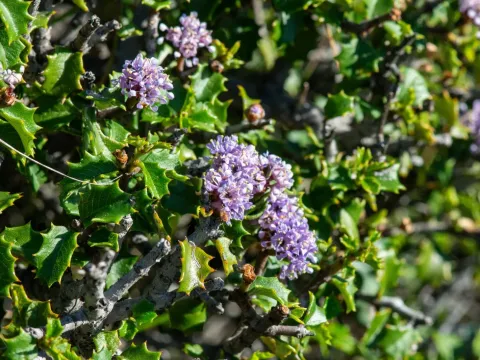
Jepson ceanothus
Ceanothus jepsonii
Jepson ceanothus (Ceanothus jepsonii) is a distinctive evergreen shrub belonging to the Rhamnaceae family. Native to the mountainous regions of Northern California, it is well-adapted to harsh, rocky environments with limited moisture availability.
What the section contains
Jepson ceanothus
The cultural success of this species depends heavily on site selection. It thrives in full sun and requires well-draining soil, making it an excellent choice for xeriscaping projects where water conservation is a priority.
Jepson ceanothus is uniquely adapted to serpentine soils, which are typically high in magnesium and low in nitrogen. Understanding this soil chemistry is essential for successful cultivation, as it eliminates the need for heavy fertilization.
Climate requirements for this plant are specific: it prefers cool, wet winters and dry summers. High humidity levels in summer can be detrimental, often leading to fungal outbreaks, so proper air circulation is a key management factor.
Regular pruning is not strictly necessary but can be used to maintain the plant's structure or stimulate denser growth. It is important to avoid pruning older wood, as this species does not regenerate easily from mature branches.
The primary threat to the health of Jepson ceanothus is root rot, typically caused by Phytophthora species which thrive in poorly drained or waterlogged soil conditions.
Insect pests such as scale insects and aphids are common concerns. They tend to cluster on the underside of leaves and along tender stems, causing yellowing and stunted growth.
In nursery settings, powdery mildew can become an issue if environmental humidity is not managed correctly, especially during periods of stagnant airflow.
Integrated pest management (IPM) strategies, including biological controls and targeted soap sprays, are recommended to maintain plant vitality without harming beneficial insects.
Monitoring the plant for early signs of canopy thinning or discoloration is vital for immediate intervention and prevention of permanent structural damage.