
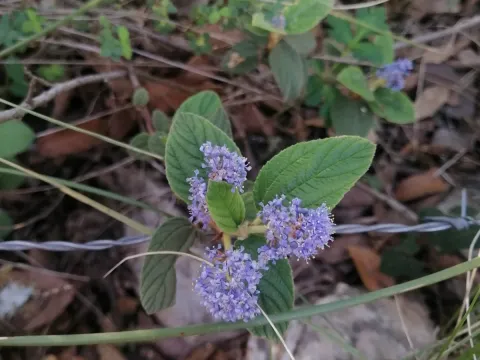
Blue blossom
Ceanothus caeruleus
Ceanothus caeruleus, commonly known as blue blossom, is a striking shrub belonging to the Rhamnaceae family. Originating from the mountainous regions of Mexico and Central America, it is highly valued for its clusters of vibrant, azure-blue flowers that bloom profusely.
What the section contains
Blue blossom
This shrub requires a warm, sunny location to thrive. It performs best when planted against a south-facing wall or in a sheltered spot where it can be protected from cold winds and frost during the dormant season.
Soil drainage is the most critical factor for successful cultivation. The plant thrives in well-draining, moderately fertile soil with a neutral to slightly acidic pH. Heavy, waterlogged clay soils should be amended with organic matter and gravel to ensure aeration.
Maintenance involves careful pruning after the flowering season to manage the shrub's shape and encourage dense growth. It is important not to prune too deeply into old wood, as the plant does not regenerate easily from mature branches.
In landscaping, it serves as an excellent specimen plant or a decorative feature in shrub borders. Its ability to attract pollinators makes it an environmentally beneficial choice for modern garden designs.
Root rot is the most serious threat to blue blossom, usually caused by overwatering or poor drainage. Once root decay starts, it is difficult to reverse, so ensuring a dry root zone during winter is essential for plant longevity.
Aphids are frequent pests that infest the tips of tender new growth. Regular monitoring and the application of mild insecticidal soaps are usually effective in controlling infestations before they cause significant damage.
Scale insects can pose a threat, attaching themselves to the stems and branches. These pests can weaken the plant over time, requiring physical removal or specific systemic treatments during the early stages of the attack.
Powdery mildew may occur if air circulation is poor, particularly in humid or confined environments. Keeping the plant properly spaced and ensuring good airflow throughout the canopy significantly reduces the risk of fungal issues.
Chlorosis is a common issue when the plant is grown in soil with high alkalinity, preventing proper iron uptake. Amending the soil with chelating iron and maintaining a slightly acidic environment helps keep the foliage lush and dark green.