
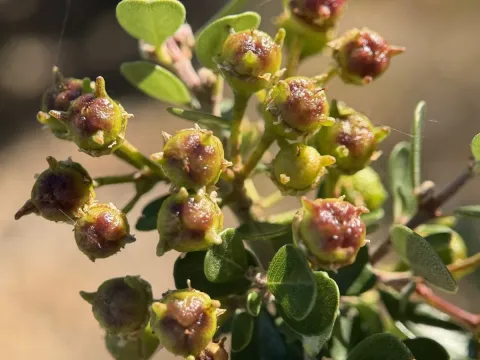
Bigpod Ceanothus
Ceanothus megacarpus
Bigpod Ceanothus (Ceanothus megacarpus) is an evergreen shrub belonging to the Buckthorn family (Rhamnaceae). Native to California, this species is a prominent member of the chaparral plant community, well-adapted to Mediterranean-type environments.
What the section contains
Bigpod Ceanothus
The plant thrives in full sun exposure. It requires a climate with mild, wet winters and dry summers. It is not suitable for regions with high humidity or severe, prolonged frost, which can cause significant damage to its evergreen foliage.
Soil drainage is the most critical factor for its survival. It naturally grows on rocky, porous substrates and will quickly develop root rot if planted in heavy or poorly draining clay soils, regardless of the climate.
Soil fertility requirements are relatively low. The plant performs best in nutrient-poor, slightly acidic to neutral soils. Excessive fertilization can lead to weak growth and susceptibility to pests and diseases.
Once established, the shrub is highly drought-tolerant. Minimal irrigation is recommended only during the first growing season to assist in deep root development, after which the plant becomes largely self-sufficient.
The primary threats to Ceanothus megacarpus are fungal infections, particularly those affecting the root system. Phytophthora root rot is a common issue in poorly managed landscapes where moisture levels fluctuate or remain high.
Insect pests such as scale insects and aphids may occasionally infest the plant, particularly in sheltered or poorly ventilated areas. These pests primarily target soft new growth, leading to reduced vigor if left untreated.
Proper pruning is an essential maintenance practice to ensure airflow and light penetration. This simple measure effectively reduces the risk of fungal leaf spots and prevents the buildup of humidity within the dense canopy.
Nutrient imbalances, particularly iron deficiency, can lead to chlorosis. This condition is easily identified by the yellowing of foliage and should be addressed by adjusting soil pH rather than applying generic fertilizers.
Regular monitoring of the foliage and stem bases is recommended. Early detection of pest colonies or signs of fungal discoloration allows for swift intervention, preserving the overall health and aesthetics of the plant.