
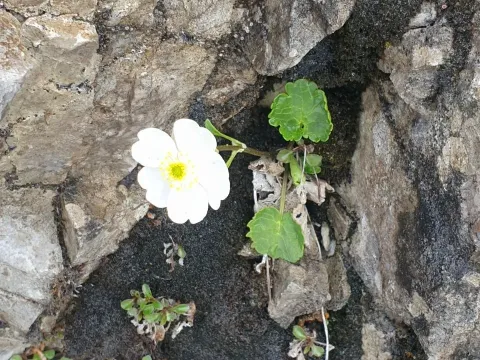
Two-lobed buttercup
Ranunculus bilobus
The two-lobed buttercup (Ranunculus bilobus) belongs to the Ranunculaceae family. It is a perennial herbaceous plant known for its restricted geographic distribution, primarily located within the limestone mountains of the Eastern Alps.
What the section contains
Two-lobed buttercup
Botanically, the species is distinguished by its small stature and specific leaf morphology. It is adapted to extreme alpine conditions, where the growing season is significantly shortened by persistent snow cover and low ambient temperatures.
The plant strictly requires calcareous soils with excellent drainage. It is typically found in rocky crevices and scree slopes where competition from other vegetation is minimal, allowing it to thrive in nutrient-poor mineral substrates.
Regarding climate, the species requires high levels of UV exposure and protection from excessive heat. It is a calciphile, meaning its distribution is heavily dictated by the presence of limestone bedrock, which influences the soil pH level.
In terms of ecological importance, Ranunculus bilobus serves as an indicator species for high-altitude limestone habitats. Conservation efforts focus on protecting these sensitive environments from climate change impacts and human interference.