
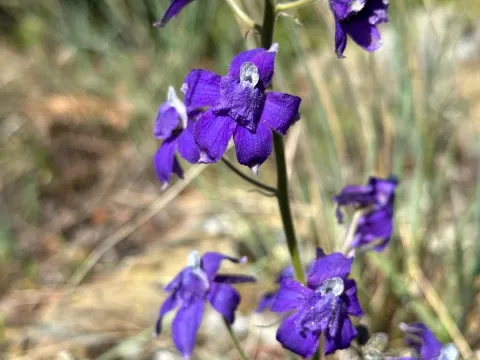
Two-color larkspur
Delphinium bicolor
Delphinium bicolor, commonly known as the two-color larkspur, belongs to the Ranunculaceae family. It is a hardy herbaceous perennial native to the mountainous regions of Western North America.
What the section contains
Two-color larkspur
The plant is distinguished by its short stature, usually growing 12 to 16 inches tall. It features deeply divided foliage and striking flowers that display a beautiful contrast between deep blue or purple petals and white centers.
This species thrives in well-drained, sandy or rocky soils. It is highly adapted to poor soils where other garden plants might struggle, making it an excellent candidate for rock gardens and xeriscaping.
Regarding climate, Delphinium bicolor requires full sun exposure to maintain its compact growth habit and vibrant bloom color. It is well-adapted to high-altitude environments with cold winters and relatively dry summers.
In landscape use, it is prized for its naturalistic look. It is often utilized in border fronts or alpine rock formations where its early summer blooming period adds essential color and interest to the design.
The primary concern for this species is fungal infection, particularly powdery mildew, which can affect the leaves during periods of high humidity. Proper air circulation is essential to mitigate this risk.
Root rot is a major threat if the plant is grown in heavy, waterlogged soil. It is crucial to ensure that the planting site has excellent drainage to prevent the crown of the plant from staying too wet.
Pests such as aphids can cause damage to the delicate flower buds and succulent new growth. In some regions, leaf miners and larks-spur fly larvae may also infest the plant tissues.
Integrated pest management, including the use of neem oil or targeted insecticides, can effectively control these populations. It is vital to monitor the plants frequently during the rapid growth phase in spring.
Cultural control measures, such as removing debris and thinning dense patches, help reduce the prevalence of pathogens. Maintaining the overall vigor of the plant through correct siting is the best defense against pests and diseases.