
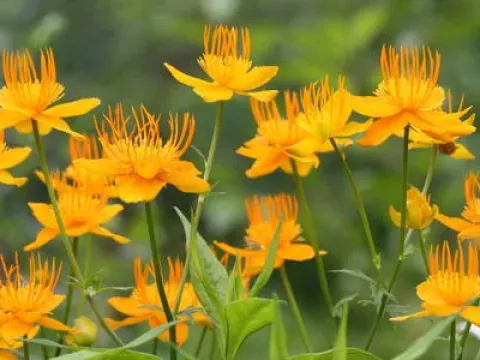
Trollius hybrids
Trollius hybrids
Propagation of Trollius hybrids can be achieved through seeds or by dividing established clumps. Seeds require a cold stratification period of at least three months to germinate effectively.
What the section contains
Trollius hybrids
For outdoor sowing, seeds should be placed in the soil during autumn, allowing them to experience natural winter temperatures that break seed dormancy.
When sowing in spring, it is essential to provide artificial stratification by keeping the seeds in a refrigerator before planting to ensure higher germination rates.
Seedlings are slow to establish, often spending the first year creating only a small rosette of leaves before progressing to significant stem growth.
Division of mature plants is the preferred method for maintaining vigorous growth and is best performed in early spring or late summer after flowering concludes.
Trollius hybrids belong to the Ranunculaceae family and are highly valued for their globe-shaped, vibrant flowers that brighten up cool-season landscapes.
These plants thrive in consistently moist, nutrient-rich, and slightly acidic soils. They are naturally adapted to wetland margins and shady woodland areas.
While they can tolerate some sun, they prefer locations with partial shade, especially in warmer climates where midday sun can cause leaves to scorch.
Routine maintenance includes heavy mulching to preserve soil moisture, which is critical since the plant does not tolerate periods of dryness.
They are extremely hardy perennials that require minimal winter protection, making them an excellent choice for cold-climate gardening in various regions.
Fungal diseases, including leaf spot and powdery mildew, are the most common threats, particularly in garden areas with poor air circulation and high humidity.
Pests such as aphids and leaf miners can cause visible damage to the foliage and buds, potentially reducing the overall ornamental impact of the plant.
Nematodes may infest the root system, causing stunted growth and chlorosis; early detection is vital to preventing the spread of these soil-borne parasites.
Preventive measures include maintaining proper spacing between plants to allow for airflow and removing any dead foliage at the end of the season.
If chemical control is necessary, applications should be timed carefully to protect pollinators attracted to the vibrant flowers during the spring season.