
Virgin's bower
Clematis virginiana
Description
Growing requirements
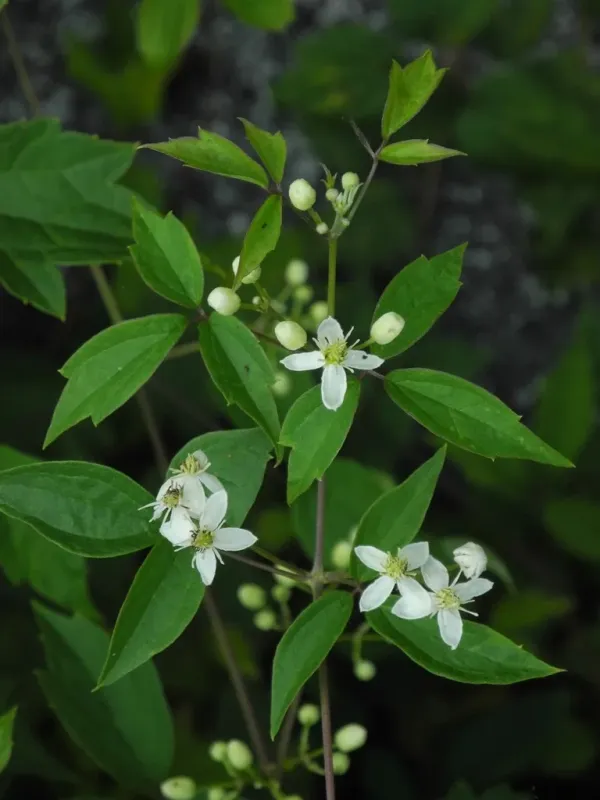
The Virgin's bower (Clematis virginiana) is a deciduous woody vine belonging to the Ranunculaceae family. Native to North America, this plant is well-adapted to diverse environments, including woodland edges and riverbanks, demonstrating significant vigor and hardiness.
Botanically, the plant is characterized by its rapid growth rate, with stems capable of reaching several meters in a single season. It features compound, three-foliate leaves with serrated margins, providing an excellent aesthetic appeal and dense foliage coverage for garden structures.
The species thrives in full sun to partial shade, requiring well-drained, nutrient-rich soil. It is vital to maintain consistent soil moisture levels, especially during the active growth period, to support the plant's expansive root system and extensive biomass production.
Agrotechnical practices include regular mulching around the base to keep roots cool and moisture levels stable. Providing a sturdy trellis or support system is essential, as the plant uses its petioles to climb and requires significant surface area to display its white, clustered flowers.
The cultivation of Clematis virginiana is primarily focused on ornamental use for vertical gardening. Due to its frost resistance, it serves as a reliable solution for covering fences, trellises, and pergolas in various temperate climate zones throughout the year.
Main diseases and pests
Fungal infections, particularly wilt caused by species like Phoma clematidina, represent a significant threat to Clematis virginiana. Proper cultural practices, such as ensuring good air circulation and avoiding overhead watering, are key to preventing such diseases.
Powdery mildew often affects the foliage during humid periods with stagnant air. Management involves applying appropriate fungicides when symptoms appear and thinning out the dense growth to allow for better light penetration and airflow through the center of the vine.
Pests such as aphids and spider mites can colonize the soft tissue of new shoots, reducing the plant's vigor. Integrated pest management, including the use of horticultural soaps or selective insecticides, is effective when implemented at the early stages of infestation.
Root-knot nematodes can weaken the plant by damaging the root system, leading to stunted growth. Maintaining soil health through organic amendments can help build the plant's natural resistance, while crop site management helps to limit nematode proliferation.
Pruning is a crucial management practice for maintaining the plant's health. By removing dead or diseased sections during the dormant season, the grower reduces the potential for fungal pathogens to overwinter, ensuring a healthier and more robust plant in the following spring.