
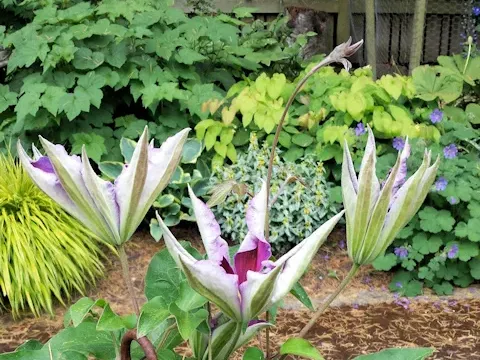
Clematis vedrariensis
Clematis vedrariensis
Clematis vedrariensis is a hybrid climbing plant belonging to the Ranunculaceae family. It originated from a cross between Clematis montana and Clematis chrysocoma, inheriting vigorous growth habits and attractive, large flowers that appear in late spring.
What the section contains
Clematis vedrariensis
The species thrives in fertile, well-draining soil that remains consistently moist but not waterlogged. Neutral to slightly alkaline soil pH is preferred for optimal nutrient absorption and vigorous vine development.
Climate requirements include a sheltered position, preferably facing south or west, to protect the plant from harsh, drying winds. While it is hardy in many temperate zones, young plants require winter protection to establish a strong root system.
Agricultural techniques focus on training the vine to specific supports. As it is a heavy climber, sturdy trellises, wires, or pergolas are necessary to manage its weight and ensure the foliage receives adequate sunlight exposure.
Horticultural uses are primarily aesthetic. Due to its dense growth and rapid coverage, it is widely used in landscape design for covering walls, fences, and creating natural screens or flowering canopies in private and public gardens.
The most significant pathological threat is Clematis wilt, caused by Phoma clematidina, which can cause sudden collapse of stems. Regular monitoring and removing infected parts are crucial to contain the spread of the fungus.
Common pests include aphids and mites, which tend to congregate on the underside of leaves during warm, dry spells. Integrated pest management, including natural predators or mild soaps, is recommended for sustainable control.