
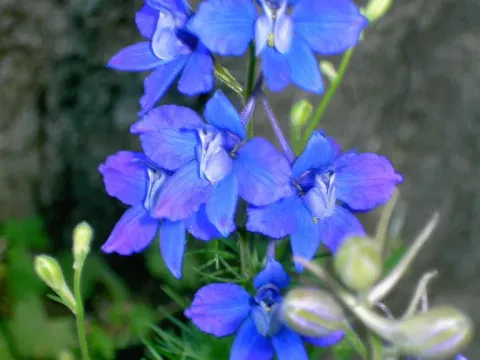
Consolida
Consolida
Sowing of Consolida is typically performed in early spring as soon as the soil warms up to a temperature of 5-8 degrees Celsius.
What the section contains


Consolida
In regions with mild winters, autumn sowing is also a viable option, allowing for earlier germination and better establishment of the plant root system.
Seeds should be sown in rows with spacing of 30-40 centimeters between them, ensuring a seeding depth of about 1.5 to 2 centimeters.
It is crucial to maintain adequate soil moisture levels after sowing to ensure quick emergence of seedlings and to avoid desiccation of the seedbed.
The seeding rate depends on the intended end-use of the crop, whether for medicinal purposes or for seed production, ranging from 6 to 10 kg/ha.
Consolida belongs to the Ranunculaceae family and is an annual herbaceous plant featuring distinctively branched stems and delicate flower spikes.
The plant thrives in sunny, open locations as excessive shade can result in weak, leggy stems and a reduction in the overall flowering performance.
Well-drained, fertile soils with a neutral or slightly alkaline pH are considered ideal for achieving maximum vegetative growth and health.
While the plant exhibits moderate drought tolerance, regular irrigation during the peak growth and flowering phases is essential for optimal development.
Temperatures ranging from 18 to 25 degrees Celsius are optimal for the plant's development, allowing it to complete its life cycle efficiently.
Flea beetles pose a significant threat during the early seedling stage, often causing severe damage to the young foliage of the growing plants.
High humidity and poor air circulation are primary factors that lead to the development of powdery mildew, affecting both yield and plant quality.
Root rot is a common issue when the soil remains waterlogged, which highlights the importance of choosing sites with excellent drainage capabilities.
Aphid infestations can weaken the plants significantly by feeding on the sap, leading to distorted flower spikes and reduced aesthetic value.
Integrated pest management, including crop rotation and the removal of host weeds, is recommended to keep pest populations at manageable levels.
Harvesting for medicinal use is conducted at the peak of the flowering period, ensuring that the concentration of active alkaloids is at its highest.
The aerial parts are harvested using clean, sharp blades to ensure minimal stress to the remaining plant tissue during the collection process.
Drying must be carried out in shaded, well-ventilated areas or in specialized dryers at low temperatures to preserve the plant's chemical compounds.
Seed harvesting occurs when the capsules turn brown and dry, indicating that the seeds have reached full maturity and are ready to be collected.
Once harvested, the seeds should be cleaned to remove debris and stored in a cool, dry environment to maintain long-term viability and quality.