
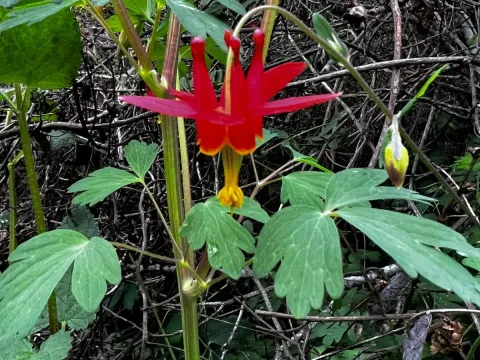
Columbine
Aquilegia L.
Columbine seeds can be sown outdoors in the fall to allow natural stratification during the winter. This practice typically leads to more vigorous germination in the early spring.
What the section contains
 Alpine columbine
Aquilegia alpina L.
Alpine columbine
Aquilegia alpina L.
 Canadian columbine
Aquilegia canadensis L.
Canadian columbine
Aquilegia canadensis L.
 European columbine
Aquilegia vulgaris L.
European columbine
Aquilegia vulgaris L.
 Golden columbine
Aquilegia chrysantha A. Gray
Golden columbine
Aquilegia chrysantha A. Gray
 Hybrid columbine
Aquilegia x cultorum Bergmans
Hybrid columbine
Aquilegia x cultorum Bergmans
 Long-spurred columbine
Aquilegia longissima A. Gray ex S. Watson
Long-spurred columbine
Aquilegia longissima A. Gray ex S. Watson
 Rocky Mountain columbine
Aquilegia coerulea E. James
Rocky Mountain columbine
Aquilegia coerulea E. James
Columbine
For greenhouse cultivation, seeds should be started indoors in late winter. Since the seeds require light to germinate, they must be sown on the surface and pressed slightly into the soil.
Optimal germination occurs at temperatures between 18 and 20 degrees Celsius. Seedlings usually emerge within two to four weeks depending on the environmental conditions.
Once the seedlings develop two or three sets of true leaves, they should be transplanted into individual pots. This allows for better root development before they are moved to their permanent spot.
Planting in the garden should occur after the threat of frost has passed. Spacing is crucial, with 30 to 40 centimeters between plants to ensure proper air circulation.
Aquilegia is a genus of herbaceous perennial plants in the Ranunculaceae family, native to meadows, woodlands, and high altitudes throughout the Northern Hemisphere.
The plants thrive in partial shade but can tolerate full sun in cooler climates if the soil moisture is consistently maintained. They are known for their distinct spurred flowers.
Well-drained, humus-rich soil is essential for success. Columbines prefer slightly acidic to neutral soil and will not survive well in heavy, waterlogged clay environments.
Maintenance includes regular watering during dry spells and the removal of weeds. Adding compost around the base of the plant in the spring helps retain moisture and provides nutrients.
Fertilization with a balanced, slow-release fertilizer at the start of the growth season encourages abundant blooming and maintains the plant's overall health.
Powdery mildew is the most common fungal issue affecting Aquilegia, characterized by a white powdery coating on the foliage. Proper spacing and airflow are the best preventative measures.
Leaf miners, aphids, and spider mites can attack the plants. If an infestation occurs, horticultural oils or appropriate insecticidal soaps should be applied promptly.
Slugs and snails can cause damage, especially in cool, wet springs. Traps or physical barriers around the base of the plants can help protect the foliage from damage.
Root rot caused by stagnant water is a significant threat. Ensuring excellent soil drainage and avoiding overhead irrigation can reduce the risk of this condition significantly.
Deadheading spent flowers is recommended not only to improve the aesthetics of the garden but also to encourage the plant to direct its energy into root growth rather than seed production.