
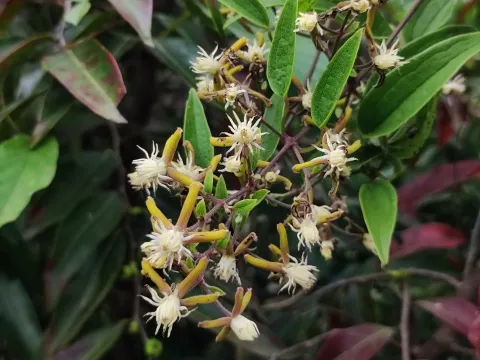
Clematis hedysarifolia
Clematis hedysarifolia
Clematis hedysarifolia is a perennial woody climber belonging to the Ranunculaceae family. Its natural origin is rooted in the tropical and subtropical zones of Asia, particularly within the Indian subcontinent and neighboring regions, where it thrives in warm, humid habitats.
What the section contains
Clematis hedysarifolia
The botanical characteristics of this species include compound pinnate leaves that distinguish it from the more common temperate Clematis species. It exhibits typical climbing behavior, using its leaf stalks to coil around supports as it reaches toward sunlight in its native forest environments.
Regarding climatic requirements, the plant demands warm temperatures throughout the year, as it lacks significant frost tolerance. The soil should be well-drained and nutrient-rich, preferably with a slightly acidic to neutral pH. A consistent moisture level is vital for the development of its root system.
Agricultural management involves careful irrigation, especially during the peak growing season, to ensure the plant does not undergo drought stress. Organic mulching is recommended to maintain stable soil temperatures and moisture retention, while trellising is mandatory to support its vertical growth habit.
Economically, Clematis hedysarifolia is primarily recognized for its ornamental value in landscaping. It serves as an excellent candidate for vertical greenery in botanical gardens and warm-climate urban settings, adding biodiversity and aesthetic appeal to vertical structures.
The plant is susceptible to various fungal infections, most notably Clematis wilt, which can cause sudden collapse of stems. Proper air circulation and sanitation within the garden are essential to manage these pathogenic threats effectively.
Common pests include aphids, which cluster on tender new foliage, and spider mites, which tend to proliferate in hot and dry conditions. Monitoring and timely application of biological control or insecticides are standard practices to ensure the plant remains vigorous and healthy.