
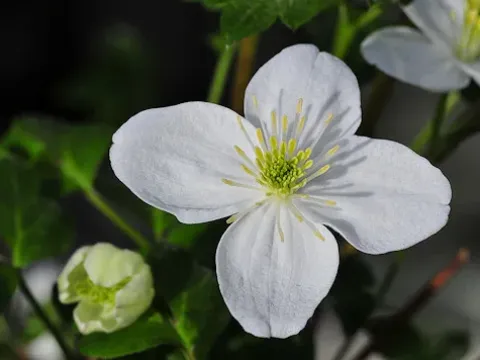
Clematis gracilifolia
Clematis gracilifolia
Clematis gracilifolia is a woody vine belonging to the Ranunculaceae family. It is native to the mountain regions of Western China, where it thrives in rocky, well-drained environments. The species is highly valued for its delicate foliage and clusters of small, fragrant flowers.
What the section contains
Clematis gracilifolia
Optimal growth requires a site with bright, indirect sunlight. While the top of the vine needs sun for blooming, the root zone must be kept cool and shaded. Planting low-growing perennials around the base is a common practice to protect the root system from overheating.
The ideal soil is fertile, loose, and well-drained with a neutral or slightly alkaline pH. Waterlogging is detrimental to the plant, so incorporating grit or sand into the planting hole is recommended for heavy soils to ensure proper drainage.
This species prefers a temperate climate with high ambient humidity during the growing season. In cooler regions, it is essential to provide winter protection, as frost can damage the sensitive buds and young stems if they are not insulated properly.
Agrotechnical maintenance involves the installation of sturdy trellis systems. Since the plant uses its leaf petioles to climb, the support structure should have a narrow diameter, allowing the vine to anchor itself securely as it grows upward.
Clematis wilt, caused by soil-borne fungi, is the primary threat to this crop. It manifests as a sudden wilting of stems, often leading to rapid plant death. Immediate excision of infected tissue and soil drenching with appropriate fungicides are required for containment.
Powdery mildew often appears during periods of high humidity and poor air circulation. Proper spacing between plants and selective pruning to improve airflow within the canopy are essential preventive measures to maintain plant health.
Aphids tend to accumulate on the tender tips of new growth. These pests stunt leaf development and can transmit viral diseases; therefore, monitoring should be performed weekly during the spring growth flush using systemic insecticides when necessary.
Spider mites are prevalent in hot, dry conditions. They cause stippling on the leaves and can lead to premature defoliation. Increasing humidity around the plant and utilizing targeted miticides are effective control methods.
Root-knot nematodes can compromise the plant's ability to absorb water and nutrients. Preventing their spread involves selecting pathogen-free nursery stock and maintaining healthy soil microbial activity through the addition of organic compost and mulching.