
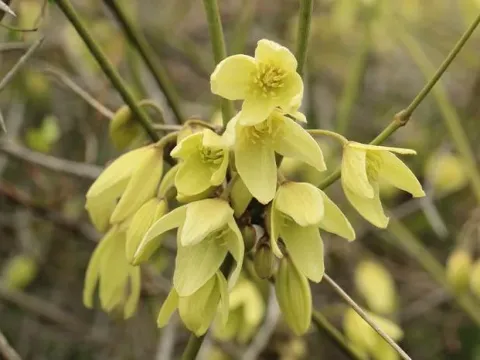
Clematis glauca
Clematis glauca
Sowing Clematis glauca seeds is best performed in the autumn, allowing them to undergo natural stratification in the soil throughout the winter months.
What the section contains
Clematis glauca
If sowing is intended for the spring, seeds must be artificially stratified in a cold environment (2–5 degrees Celsius) for at least two months to break dormancy.
Use a well-draining seed-starting mix composed of peat and perlite to maintain the necessary moisture levels without risking waterlogging the delicate seeds.
Seeds should be covered with a thin layer of fine soil, roughly 1 centimeter deep, to ensure they remain anchored while allowing adequate light penetration.
Once seedlings have developed two sets of true leaves, they can be carefully transplanted into larger pots or their permanent garden locations.
Belonging to the Ranunculaceae family, Clematis glauca is a vigorous woody climber valued for its unique glaucous foliage and distinct floral characteristics.
The plant thrives in full sun but prefers to have its root system shaded, which helps keep the soil cool and moist during peak summer heat.
Well-drained, fertile soil with a neutral to slightly alkaline pH is ideal for promoting healthy root growth and long-term vitality of the vine.
Although it is moderately drought-tolerant once established, regular deep watering is necessary to support its rapid growth during the active growing season.
Clematis glauca is notably winter-hardy and adapts well to various climatic conditions, making it an excellent choice for vertical structural landscaping.
Fungal wilt is the most significant threat to the plant, often appearing as sudden wilting of stems due to soil-borne pathogens attacking the vascular system.
Powdery mildew can infect the leaves during periods of high humidity or poor air circulation, requiring prompt treatment with suitable fungicides.
Aphids and spider mites are common pests that feed on young foliage and stems, necessitating regular monitoring and integrated pest management strategies.
Root rot caused by stagnant water is a common issue, which can be mitigated by ensuring proper soil drainage and avoiding overwatering the root zone.
Maintaining a clean garden environment by removing debris and practicing regular pruning helps keep the plant healthy and prevents the spread of pathogens.