
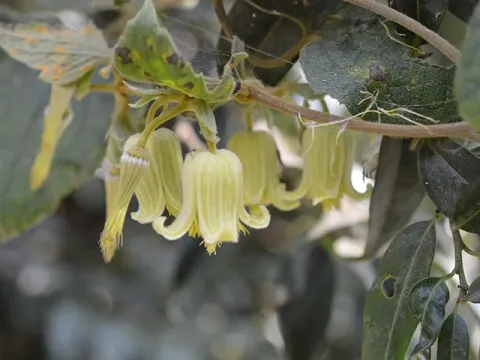
Clematis grewiiflora
Clematis grewiiflora
Sowing seeds of Clematis grewiiflora requires cold stratification to break dormancy. Seeds should be planted in early spring after being exposed to low temperatures, which is essential for uniform germination in this species.
What the section contains
Clematis grewiiflora
A well-draining, sterile potting mix is recommended to prevent damping-off diseases during the initial development phase. Seeds should be sown at a shallow depth, ensuring they are not buried too deeply to allow for proper gas exchange.
Maintaining a stable temperature range is critical for the seedlings to thrive. Consistent moisture levels, achieved through misting, help the delicate root systems establish without suffering from waterlogged conditions.
Vegetative propagation via cuttings is a highly effective alternative for maintaining the genetic traits of a specific plant. Semi-hardwood cuttings are usually harvested in mid-summer and treated with rooting hormones before being placed in a greenhouse.
Once the young plants have developed a sufficient root system, they can be acclimated to outdoor conditions. Careful hardening off prevents shock when transitioning from controlled environments to the open garden.
Clematis grewiiflora is a robust climber belonging to the Ranunculaceae family. It thrives in locations where it can access full sunlight for its aerial parts while keeping its root zone cool and shaded.
The soil must be fertile, rich in organic matter, and possess excellent drainage capabilities. Adding compost during the planting process enhances soil structure and provides necessary nutrients for sustained growth throughout the season.
Support structures, such as trellises or arbors, are necessary to guide the vigorous growth of the vine. Properly securing the stems allows the plant to expand efficiently and bloom to its full decorative potential.
Watering requirements are specific: the soil should remain moist but never waterlogged. During periods of high temperature, mulching the base of the plant helps retain moisture and protects the root system from excessive heat.
Periodic fertilization with a balanced, slow-release fertilizer supports both foliage development and flower production. Following the manufacturer's recommendations prevents over-fertilization, which could lead to weak, succulent growth.
Wilt, caused by soil-borne fungi, represents the most significant threat to the health of this species. Early detection and immediate removal of affected stems are critical to preventing the total loss of the plant.
Powdery mildew is a common foliage issue, especially in environments with poor air circulation or high humidity. Applying organic or synthetic fungicides can effectively control the outbreak before it affects the entire vine.
Aphids and mites are common pests that target the soft growth of the plant during the spring. Monitoring and the timely application of insecticidal soaps keep populations low and prevent significant damage to the plant tissue.
Slugs and snails may feed on emerging shoots, particularly in the spring. Using copper tape barriers or non-toxic traps around the base provides an effective defense mechanism for young plants.
Root-knot nematodes can weaken the plant by attacking the root system, causing yellowing and stunted growth. Soil solarization or selecting nematode-resistant rootstocks are strategies to mitigate these issues in infected areas.