
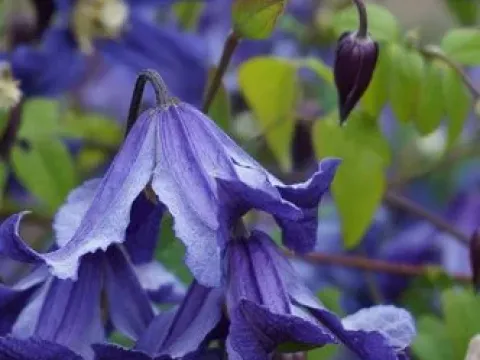
Clematis eriostemon
Clematis eriostemon
Clematis eriostemon is a perennial climbing plant belonging to the Ranunculaceae family. Known for its distinct woolly stamens and elegant, bell-shaped flowers, it serves as a highly attractive botanical specimen for temperate zone landscapes.
What the section contains
Clematis eriostemon
The plant originates from regions where it thrives under moderate temperatures and high light exposure. When cultivating this species, it is essential to provide a location where the upper parts of the plant receive sunlight while the root zone is kept cool and shaded.
Soil requirements for this clematis include a well-drained, fertile, and humus-rich substrate. A neutral to slightly alkaline soil pH is preferred. Poorly drained heavy clays should be amended with organic matter to prevent root rot.
Agrotechnical practices involve consistent watering during the growing season, particularly during dry spells. Mulching the base of the plant with organic compost or bark helps retain soil moisture and maintains the required cool root environment.
The ornamental value of this plant makes it ideal for covering pergolas, trellises, or walls. Its versatility allows for various landscape applications, ranging from formal garden structures to naturalistic border plantings.
The most significant disease threat to Clematis eriostemon is wilt (Phoma clematidina), which causes sudden collapse of stems. Regular monitoring and removing infected shoots immediately can save the plant from complete destruction.
Powdery mildew may occur in conditions with poor air circulation or high humidity. Applying sulfur-based or systemic fungicides during the early stages of the infection is recommended to manage the spread of the fungus.
Pests such as aphids and spider mites can infest the foliage, particularly during hot summers. Controlling these populations with insecticidal soaps or horticultural oils is usually effective in minor to moderate infestations.
Slugs and snails can cause substantial damage to emerging shoots in the spring. Implementing physical barriers like copper tape or crushed eggshells can help protect the vulnerable new growth.
Root-knot nematodes can weaken the plant over time. Maintaining healthy soil structure and ensuring plants are not stressed by lack of water or nutrients helps the clematis maintain better natural resistance against soil-borne pests.