
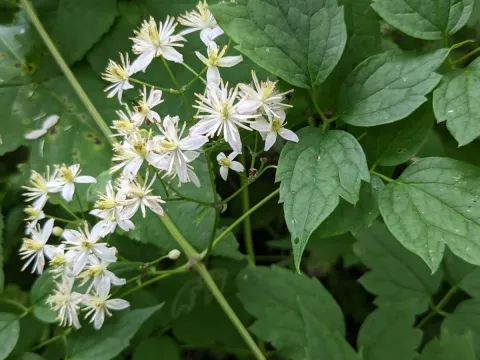
Clematis brevicaudata
Clematis brevicaudata
Sowing seeds of Clematis brevicaudata is ideally performed in the autumn to allow for natural cold stratification during the winter months, which significantly improves germination rates.
What the section contains
Clematis brevicaudata
If spring sowing is preferred, seeds must be artificially stratified in a cold environment for 60 to 90 days prior to planting. This simulates natural conditions and breaks seed dormancy.
Seeds should be sown in a well-drained, sterile seed-starting mix at a shallow depth. Consistent moisture levels must be maintained until the seedlings appear, which may take several weeks.
Once seedlings have developed their first set of true leaves, they should be carefully pricked out and transplanted into individual deep containers to accommodate their root growth.
Transplanting into a permanent location should occur when the threat of frost has completely passed. Providing a sturdy trellis or support structure from the start is essential for this vine.
Clematis brevicaudata belongs to the Ranunculaceae family and is native to East Asia. It is a vigorous woody climber characterized by its rapid growth and abundant, small white flowers.
The plant thrives in locations that offer full sun for the foliage while keeping the root zone shaded and cool. Applying organic mulch around the base is a standard practice for heat protection.
The ideal soil for this species is deep, fertile, and rich in organic matter. A neutral to slightly alkaline pH is optimal, and the soil must be well-draining to prevent root rot.
Irrigation should be regular, particularly during the active growing season. Deep watering is preferred over frequent light sprinkles to encourage roots to grow deeper into the soil profile.
Fertilization with a balanced NPK ratio is recommended in early spring as new shoots emerge. A secondary application during the mid-season helps support the energy demands of profuse flowering.
Clematis wilt, a fungal condition caused by Phoma clematidina, is the primary disease threat. It manifests as rapid blackening and wilting of the stem, often requiring immediate removal.
Pests such as aphids and spider mites can infest the foliage, particularly during hot, dry spells. These insects weaken the vine by consuming sap and can serve as vectors for viral infections.
Powdery mildew is a common fungal issue that presents as a white, dusty layer on the leaves. Improved air circulation around the vine and foliage is key to minimizing this risk.
Root-knot nematodes can cause significant stress to the plant by disrupting nutrient uptake. Planting repellent species nearby and maintaining soil health can provide a degree of protection.
Sanitation practices, including the removal of dead foliage and pruned stems at the end of the season, are crucial for preventing the overwintering of pathogens and pests within the vicinity.