
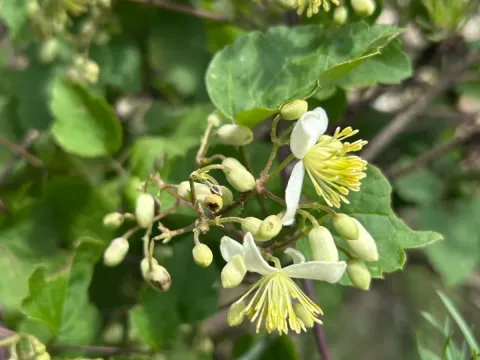
Clematis brachiata
Clematis brachiata
Clematis brachiata, commonly known as the Traveller's Joy of South Africa, belongs to the Ranunculaceae family. It is a vigorous, woody climber native to the woodlands and mountain slopes of Southern Africa, highly valued for its fragrant, star-shaped flowers.
What the section contains
Clematis brachiata
The botanical structure of this species includes twining petioles that allow it to scale natural supports, such as trees and shrubs. It can reach a height of several meters, producing dense foliage that provides excellent seasonal shading in garden designs.
This plant thrives in deep, fertile, well-drained soils. While it prefers sunny aspects for optimal flower production, it also tolerates partial shade. Ensuring the roots are shaded and kept cool—a standard requirement for most Clematis species—is beneficial for its long-term health.
Climatic requirements are linked to its origin; it is adapted to warm growing seasons and requires consistent moisture during periods of active growth. Once established, it shows a reasonable level of resilience to environmental stresses.
In terms of agricultural and horticultural use, Clematis brachiata is primarily utilized as a vertical screen or ornamental feature. Ethnobotanical studies also highlight its historical usage in traditional remedies across its native range.
The most significant threat to the plant's health is fungal wilt, which can cause sudden collapse of stems. Proper air circulation and avoiding overhead watering are crucial management practices to mitigate these risks.
Common insect pests include aphids, which cluster on the tender new growth, and spider mites that thrive in hot, dry weather. Monitoring and appropriate interventions are necessary to prevent severe infestation and loss of vitality.
Garden snails and slugs can cause damage to emerging shoots during the early spring. Implementing physical barriers or organic pest control methods helps protect the plant during its most vulnerable stage of development.
Root rot is often a consequence of poor drainage or overwatering in heavy soil types. Amending planting holes with compost and sand significantly improves success rates by preventing water stagnation.
Maintenance pruning is recommended to ensure strong, healthy growth and to manage the plant's size. Removing dead or diseased wood annually helps in maintaining the plant's structural integrity and aesthetic value.