
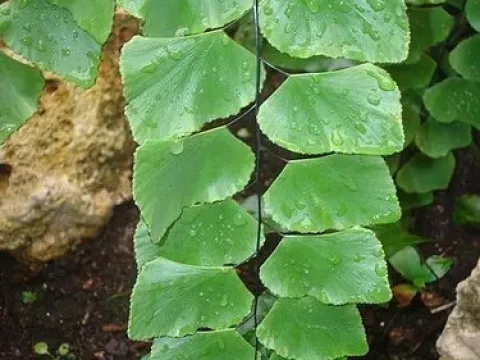
Peruvian maidenhair fern
Adiantum peruvianum
The Peruvian maidenhair fern (Adiantum peruvianum) is a distinct species within the Pteridaceae family. It is native to the tropical regions of South America, primarily Peru.
What the section contains
Peruvian maidenhair fern
This fern thrives in bright, indirect light. Direct sunlight is highly detrimental to its delicate foliage, causing bleaching and wilting of the fronds.
Maintaining high humidity levels is crucial for this species. It should be kept in an environment with high moisture levels, ideally between 60% and 80% relative humidity.
The soil must be well-draining, slightly acidic, and rich in organic matter. A mixture consisting of peat moss, leaf mold, and perlite provides an excellent balance for its root system.
Temperature management is vital; the plant requires consistent warmth, ideally between 18°C and 24°C. It is extremely sensitive to cold drafts and sudden drops in temperature.
Scale insects are a common pest for Adiantum species, often found clinging to the underside of the leaflets, where they extract plant sap and weaken the fern.
Mealybugs are another serious threat, appearing as white, cottony masses in the frond axils, which can stunt the overall growth of the plant if left untreated.
Spider mites are notorious for attacking this fern when air humidity is insufficient. Their presence is indicated by fine webbing and yellowing of the frond tissue.
Root rot, caused by overwatering or poor drainage, is the primary reason for plant failure. It leads to dark, mushy roots that can no longer support the plant's nutritional needs.
Fungal leaf spot diseases may occur if the foliage remains wet for extended periods or if air circulation is inadequate in the growing environment.