
Adiantum stenochlamys
Adiantum stenochlamys
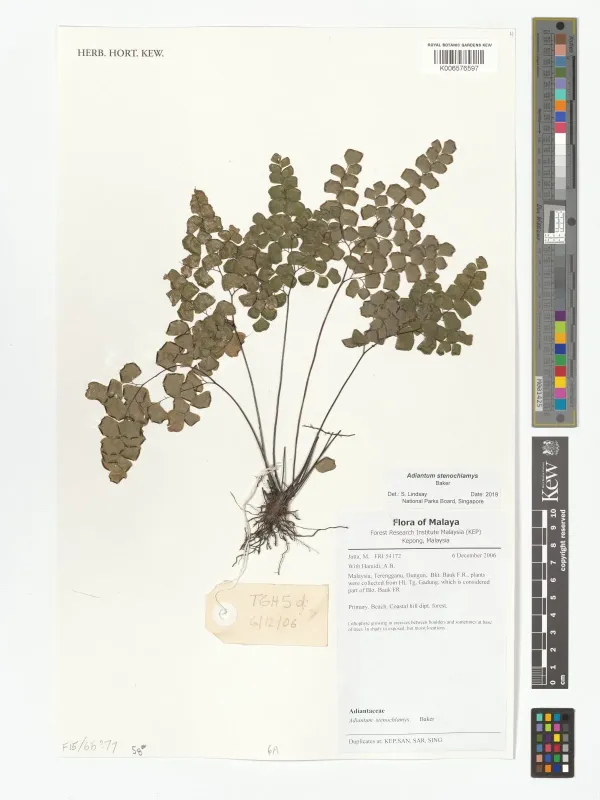
Description
Growing requirements
Adiantum stenochlamys is a member of the Pteridaceae family. This ornamental fern species is characterized by its delicate fronds and is native to tropical habitats where it grows in sheltered, high-humidity environments.
Climate requirements for this culture are strictly centered on maintaining high humidity levels, ideally between 65% and 80%. In a commercial or greenhouse setting, consistent misting systems are essential to mimic their natural humid forest microclimate.
The thermal requirements for Adiantum stenochlamys are moderate, with an ideal temperature range of +19°C to +25°C. Exposure to sudden cold drafts or temperatures below +15°C can cause significant physiological stress and leaf drop.
Regarding soil, the plant requires a well-draining, acidic, and organic-rich medium. A peat-based mixture with added perlite or bark is highly recommended to ensure sufficient root aeration and moisture retention without the risk of waterlogging.
Light management is crucial for the aesthetic quality of the foliage. These plants perform best under bright, indirect light conditions. Direct sunlight is strictly avoided as it causes rapid desiccation and burning of the sensitive fronds.
Main diseases and pests
Scale insects are a primary pest threat, as they attach to the petioles and stems, draining the plant's resources. Control measures include systemic insecticide applications and regular monitoring of the plant's health.
Root rot is the most common disease associated with poor irrigation management. It is often caused by overwatering and insufficient drainage in the growing container, leading to the rapid decay of the fern's rhizomes.
Spider mites are prevalent in environments where air humidity drops below recommended thresholds. These pests cause yellowing and stippling on the leaves, which can be treated with specific miticides or by restoring adequate humidity levels.
Fungal spot diseases may occur if moisture is left on the fronds for too long without proper airflow. Improving circulation and ensuring that the foliage stays relatively dry during the evening can mitigate the risk of infection.
Integrated pest management protocols, including early detection and the use of sterile growing media, are the best methods to ensure the longevity and commercial viability of Adiantum stenochlamys crops.