
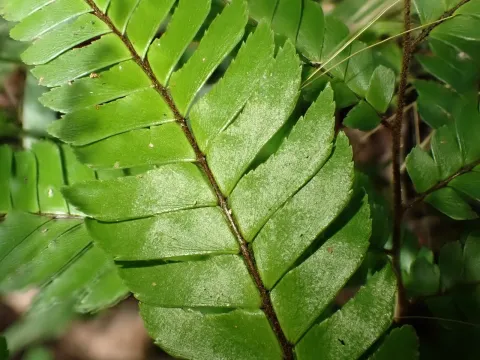
Adiantum tetraphyllum
Adiantum tetraphyllum
Adiantum tetraphyllum is a member of the Pteridaceae family. This perennial fern species originates from the tropical regions of Central and South America, where it thrives in shaded, high-humidity environments.
What the section contains
Adiantum tetraphyllum
The cultivation of this fern requires a steady temperature range, ideally between 18°C and 24°C. It is sensitive to cold drafts and extreme temperature fluctuations, which often cause the delicate fronds to wither prematurely.
The ideal soil medium must be well-draining yet capable of retaining moisture. A mixture of peat moss, leaf mold, and perlite or charcoal provides the necessary structure and aeration for the fern's fine root system.
Consistent watering is essential for Adiantum tetraphyllum. The substrate should remain moist at all times, but waterlogging must be avoided to prevent root rot. Soft, chlorine-free water is preferred to maintain leaf health.
Regarding light, this plant prefers bright, indirect light. Direct sunlight should be avoided as it can scorch the foliage, leading to brown tips and loss of the plant's characteristic delicate texture.
Pests such as spider mites, scale insects, and mealybugs are the primary threats to this culture. They are particularly active in dry environments, necessitating regular misting and humidity control to keep the plant resilient.
Fungal infections, particularly root rot, are common results of improper irrigation practices. Overwatering creates an anaerobic environment where pathogens flourish, destroying the root structure of the fern.
Management of these threats involves both cultural and chemical control. Adjusting the irrigation frequency and improving airflow can mitigate fungal issues, while specific miticides or insecticides are needed for pest infestations.
Regular monitoring of the fronds, especially the underside, is necessary to catch infestations in their early stages. Early intervention is key to protecting the delicate foliage from permanent damage.
Keeping the plant clean and removing any dead or decaying matter is a vital practice. Maintaining a clean growing environment significantly reduces the risks posed by various pathogens and pests.