
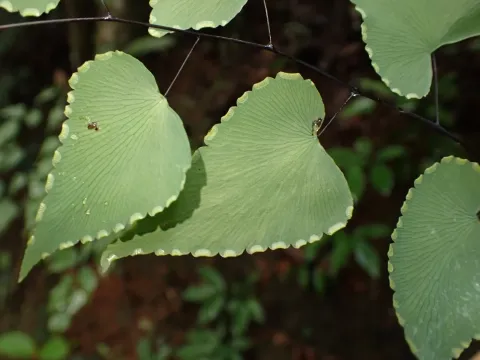
Adiantum subcordatum
Adiantum subcordatum
Adiantum subcordatum is a member of the Pteridaceae family. This species originates from the tropical rainforests of Central and South America, where it thrives in shaded, humid environments.
What the section contains
Adiantum subcordatum
The plant requires a high level of atmospheric humidity to maintain its health. It is essential to ensure that the surrounding air remains moist, ideally between 60% and 80%, to prevent the fronds from drying out.
Regarding soil requirements, the substrate must be well-drained and slightly acidic. A mix of peat, leaf mold, and coarse sand or perlite works best to ensure the roots receive adequate aeration while retaining moisture.
Light management is crucial; Adiantum subcordatum prefers bright, indirect light. Direct sunlight can cause severe leaf scorch and damage the delicate structure of the foliage, so shading is mandatory.
This fern is primarily used for ornamental purposes in indoor gardening and conservatory displays. Its delicate appearance adds a sophisticated aesthetic to plant collections, provided the environmental needs are met.
The most common pests include scale insects and mealybugs, which tend to congregate on the undersides of the fronds. Regular inspection and wiping the leaves can help manage early infestations.
Spider mites are another significant threat, particularly in environments with low humidity. Increasing moisture levels and applying targeted acaricides are the standard methods for mitigation.
Root rot is the most prevalent disease, caused by overwatering or poor drainage. Ensuring the pot has drainage holes and avoiding water stagnation are fundamental practices for preventing this issue.
Fungal leaf spot diseases can develop if the foliage remains wet for long periods in poorly ventilated areas. Keeping the leaves dry and ensuring good airflow can significantly reduce infection risks.
Preventative measures for this fern involve using sterilized potting medium and maintaining consistent care practices to ensure the plant remains vigorous and resistant to common pathogens.