
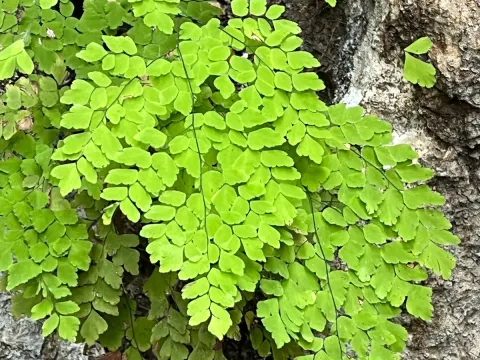
Adiantum tenerum
Adiantum tenerum
Adiantum tenerum, commonly known as a type of maidenhair fern, belongs to the Pteridaceae family. Native to the tropical regions of the Americas, this species is highly valued for its delicate, lacy foliage and slender, dark-colored stipes that give it an elegant appearance.
What the section contains
Adiantum tenerum
The plant thrives in stable tropical environments, requiring consistent temperatures between 18°C and 22°C. It is sensitive to drafts and direct sunlight, which can quickly dehydrate the thin leaf segments and cause significant damage to the plant's overall architecture.
Successful cultivation requires a loose, well-draining soil mix rich in organic matter. A mixture of peat, leaf mold, and coarse sand is recommended to maintain the necessary moisture levels while preventing root asphyxiation due to waterlogging.
Irrigation management is essential for Adiantum tenerum. The substrate must be kept consistently moist but never waterlogged. Using soft, dechlorinated water is preferable to avoid mineral buildup, which the sensitive root system of this fern does not tolerate well.
In commercial practice, Adiantum tenerum is cultivated primarily as an ornamental houseplant. It is a staple in the nursery industry, favored by interior designers and florists for its unique texture and ability to add a lush, tropical feel to indoor spaces.
The most common pests affecting Adiantum tenerum are scale insects, mealybugs, and spider mites. These pests thrive in environments with low humidity, making regular misting and proper ventilation key cultural practices to prevent infestations before they escalate.
Disease outbreaks are typically tied to suboptimal growth conditions. Overwatering often leads to root rot caused by pathogens, while extremely dry air causes leaf tips to brown and curl. Maintaining a balanced humidity level is the primary method for disease prevention.