
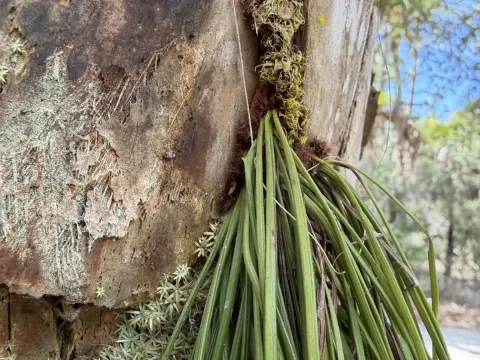
Vittaria
Vittaria
Vittaria is a genus of epiphytic ferns belonging to the Pteridaceae family. In their natural habitat, these plants are predominantly found in the tropical and subtropical regions of Asia, the Americas, and Africa, where they thrive on tree bark and rock crevices.
What the section contains


Vittaria
To ensure successful cultivation, the plant requires environmental conditions closely mimicking a tropical forest. High air humidity (above 60%) and stable temperatures between 18°C and 24°C are essential for steady growth and development.
The substrate for Vittaria must be light, airy, and well-draining, similar to that used for other epiphytes. A mixture consisting of orchid bark, sphagnum moss, and charcoal is ideal for maintaining the necessary balance of moisture and aeration for the root system.
Lighting should be bright but indirect; direct sunlight must be avoided as it causes rapid scorching of the delicate, strap-like fronds. Supplemental lighting is recommended in indoor environments to maintain plant health throughout the winter months.
Cultivation practices involve regular misting and careful watering with soft, room-temperature water. It is crucial to keep the substrate consistently moist but never waterlogged, as the roots are highly susceptible to rot when kept in saturated soil.
The primary threats to Vittaria arise from improper irrigation techniques, which often lead to crown and root rot. Poor ventilation and stagnant air further increase the susceptibility of the plant to fungal infections such as leaf spots.
Common pests affecting Vittaria include spider mites and scale insects, which often thrive in the low-humidity conditions of home interiors. Mealybugs can also infest the plant, settling in the dense foliage and sapping the plant's vitality.
Pest management relies on the timely application of mild insecticides and physical removal of insects using damp cloths. Proactive sanitation, such as removing dead fronds and isolating new plants, is key to preventing widespread infestations.
Maintaining proper hygiene and monitoring the environment helps prevent most physiological disorders. If the plant shows signs of distress, immediate adjustments to the microclimate and a change of substrate are often necessary to restore its vigor.
In terms of agricultural and horticultural use, Vittaria is utilized almost exclusively as an ornamental plant for indoor landscaping and botanical collections. Its unique, grass-like appearance makes it a popular choice for terrariums and tropical indoor gardens.