
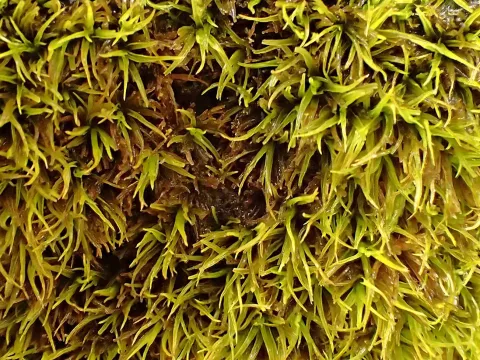
Tortella fragilis
Tortella fragilis
Tortella fragilis is a perennial moss species belonging to the Pottiaceae family. It is not considered an agricultural crop; however, it holds significant interest for botanists and ecologists studying the biodiversity of northern and alpine regions.
What the section contains
Tortella fragilis
The species has a broad circumpolar distribution, occurring across the Arctic and throughout mountainous regions of the Northern Hemisphere. It thrives in habitats characterized by exposure to cold, high winds, and specific mineral-rich soils.
The plant strictly prefers calcareous substrates, often found on limestone outcrops and rocky crevices. Its survival strategy depends on a moderate moisture regime, avoiding waterlogged conditions while maintaining turgor through dew and snowmelt.
Botanically, the moss is named for its fragile leaves, which are easily detached. These fragments are vital for the plant's vegetative reproduction, allowing it to colonize rocky surfaces where traditional seed-bearing plants would fail to establish.
In terms of ecological maintenance, preserving the substrate integrity is the most critical factor. The plant requires minimal interference and stable microclimatic conditions to maintain its dense, cushion-like colonies throughout the harsh winter seasons.
The primary threats to Tortella fragilis populations are habitat destruction and environmental changes. Industrial development and mining activities often disrupt the limestone habitats that the moss requires for survival.
Climate change poses a significant risk as warming temperatures facilitate the migration of competitive vascular plants. These species can outcompete the moss for space and sunlight in previously barren areas.
Mechanical damage from foot traffic or vehicle use in remote areas can be devastating for these colonies. Due to the brittle nature of the shoots, recovery from physical disturbance is slow and depends on favorable environmental triggers.
While the moss is not subject to traditional agricultural pests, air pollution remains a major concern. As an organism that absorbs nutrients directly from the atmosphere and moisture, it is highly sensitive to acid rain and particulate matter.
In conclusion, the sustainability of this species is tied to the preservation of natural landscapes. Efforts to protect alpine and arctic flora are essential to prevent the decline of such specialized bryophyte species within their historical range.